The 15 largest construction projects of Choose France and France 2030
From 2023 to 2026, the Choose France summits have lined up ever larger investment announcements, up to €93 billion in a single edition. An announcement is not a construction site. Here are the fifteen largest industrial and energy projects with an identified location, ranked by amount, with what has actually been committed for each and the engineering each site will require.
Contents
What this ranking measures
Since 2023, the Choose France summits have changed scale. The 2023 edition announced €13 billion for 28 projects, 2024 €15 billion for 56 projects and 2025 €40.8 billion for 53 projects. On 1 June 2026, in Versailles, the State presented 71 announcements worth €93 billion. In parallel, the public France 2030 plan, with €54 billion, subsidises part of the same industries.
Method. Projects are ranked by the total amount announced for identified sites, all phases included, according to the most recent official source; a project scaled back since its announcement is ranked at its new amount.
The scope covers industrial and energy projects announced at a Choose France summit from 2023 to 2026, or backed by France 2030. The very large data centers of the AI Action Summit of February 2025 are included only if they were later confirmed at Choose France. Logistics, retail and pharmaceutical projects are excluded, as are those for which no municipality has been published (see below). Progress is recorded as of 8 November 2026.
A word of caution: these amounts are investment intentions over several years, not committed spending. Several projects reappear from one summit to the next, with a revised amount. Adding them up makes no sense.
The ranking
| Project | Location | Amount announced | Framework | Status at 8 November 2026 |
|---|---|---|---|---|
| 1. AI campus (MGX, Bpifrance, Mistral AI, Nvidia) | Fouju (Seine-et-Marne) | up to €50bn | AI Summit 2025, Choose France 2025 | authorised, appeals announced |
| 2. SoftBank, 3.1 GW of data centers | Loon-Plage (Nord), Le Bosquel (Somme), Bouchain (Nord) | €45bn (out of €75bn in the long run) | Choose France 2026 | public consultation |
| 3. Brookfield and Data4 | Cambrai and Escaudain (Nord) | up to €30bn | Choose France 2025 and 2026 | studies, land |
| 4. Nebius | Béthune (Pas-de-Calais) | more than €8bn | Choose France 2026 | works announced, not confirmed |
| 5. STMicroelectronics and GlobalFoundries | Crolles (Isère) | €7.5bn | France 2030 | partly suspended |
| 6. ProLogium, batteries | Dunkirk (Nord) | €5.2bn | Choose France 2023 | under construction, reduced capacity |
| 7. Microsoft, data centers | Petit-Landau and Hombourg (Haut-Rhin), Paris, Marseille | €4bn | Choose France 2024 | authorised, permits pending |
| 8. newcleo, reactor and fuel | Chusclan (Gard), Aube | €3bn | Choose France 2023 | development |
| 9. Digital Realty | Dugny (Seine-Saint-Denis), Marseille | €2.3bn | Choose France 2025 | under construction |
| 10. Neomat (XTC and Orano), cathodes | Gravelines and Loon-Plage (Nord) | €1.5bn | Choose France 2023 | under construction, 1st phase |
| 11. H4 Marseille Fos, synthetic aviation fuel | Fos-sur-Mer (Bouches-du-Rhône) | €1.5bn | Choose France 2025 | permitting |
| 12. Vicat, CO2 capture | Montalieu-Vercieu (Isère) | €1.5bn | France 2030 | decision end of 2027 |
| 13. ArcelorMittal, electric furnace | Dunkirk (Nord) | €1.3bn | France 2030 (2024), then energy savings certificates | under construction |
| 14. FertigHy, low-carbon fertiliser | Languevoisin-Quiquery (Somme) | €1.3bn | Choose France 2024 | permitting |
| 15. Marcegaglia, steelworks | Fos-sur-Mer (Bouches-du-Rhône) | around €1.2bn | Choose France 2026 | permitting |
The fifteen projects, one by one
1. AI campus, Fouju (Seine-et-Marne)
- Backers: MGX (United Arab Emirates), Bpifrance, Mistral AI and Nvidia.
- Location: ZAC des Bordes, in Fouju.
- Amount: up to €50 billion under the framework agreement of February 2025; €8.5 billion for the first phase according to the Choose France 2025 press kit; €35 billion in the CNDP consultation file (in French).
- Capacity: 1.4 GW by 2030.
- Jobs: not published for this site.
- Timeline: first phase operational in 2028 according to the 2025 announcement; grid connection by RTE in two steps, 240 MW at the end of 2027, then 700 MW before the end of 2029.
- Progress: fast-track connection agreement signed with RTE on 26 January 2026; environmental authorisations granted by orders of the prefect of Seine-et-Marne on 29 July 2026 (DCmag, in French), then building permit for the first phase obtained on 28 August 2026, according to the timeline published by the community of municipalities (in French); the Stop Campus IA collective has announced a series of appeals (Actu-Environnement, 13 October 2026, in French). Machinery was reported on the site in August (Reporterre, 11 August 2026, in French), but the start of phase 1 works, planned for September 2026, has not been confirmed by the developer.
What the site requires. A site of this size starts with electricity: a dedicated extra-high-voltage substation, links to the transmission grid, then medium-voltage distribution to each building, transformers, main low-voltage switchboards, UPS and generators. Phasing in steps means building and commissioning new buildings next to halls already in operation. For AI computing halls, liquid cooling and five-level commissioning, from factory acceptance to integrated systems testing, weigh as much as the civil works (see Testing and commissioning electrical installations: a profession of its own).
2. SoftBank, 3.1 GW in Hauts-de-France
- Backer: SoftBank Group, with Sesterce in Le Bosquel and EDF, owner of the land, in Bouchain. RTE is in charge of the grid connections; Schneider Electric is to manufacture electrical modules for data centers in Dunkirk.
- Locations: Loon-Plage (Port of Dunkirk, Nord), Le Bosquel (Somme), Bouchain (Nord).
- Amount: €45 billion for 3.1 GW by 2031, the first phase of a programme that "could reach €75bn" for 5 GW in France (Choose France 2026 press kit). The CNDP files put Loon-Plage and Le Bosquel at €15 to 20 billion each, excluding IT equipment.
- Jobs: around 8,600 during construction and 900 direct jobs in operation; 350 jobs announced for the Schneider Electric plant.
- Progress: in Le Bosquel, 1,380 MW in two phases on 64 ha, prior public consultation from 2 November to 18 December 2026. In Loon-Plage, 1,300 MW on around fifty hectares, connected by four underground 400 kV links of about 4 km to the Puythouck substation; guarantors appointed on 7 October 2026, consultation to come. In Bouchain, SoftBank was selected by EDF on 30 May 2026 for a 400 MW data center on the former thermal power plant. No building permit is known.
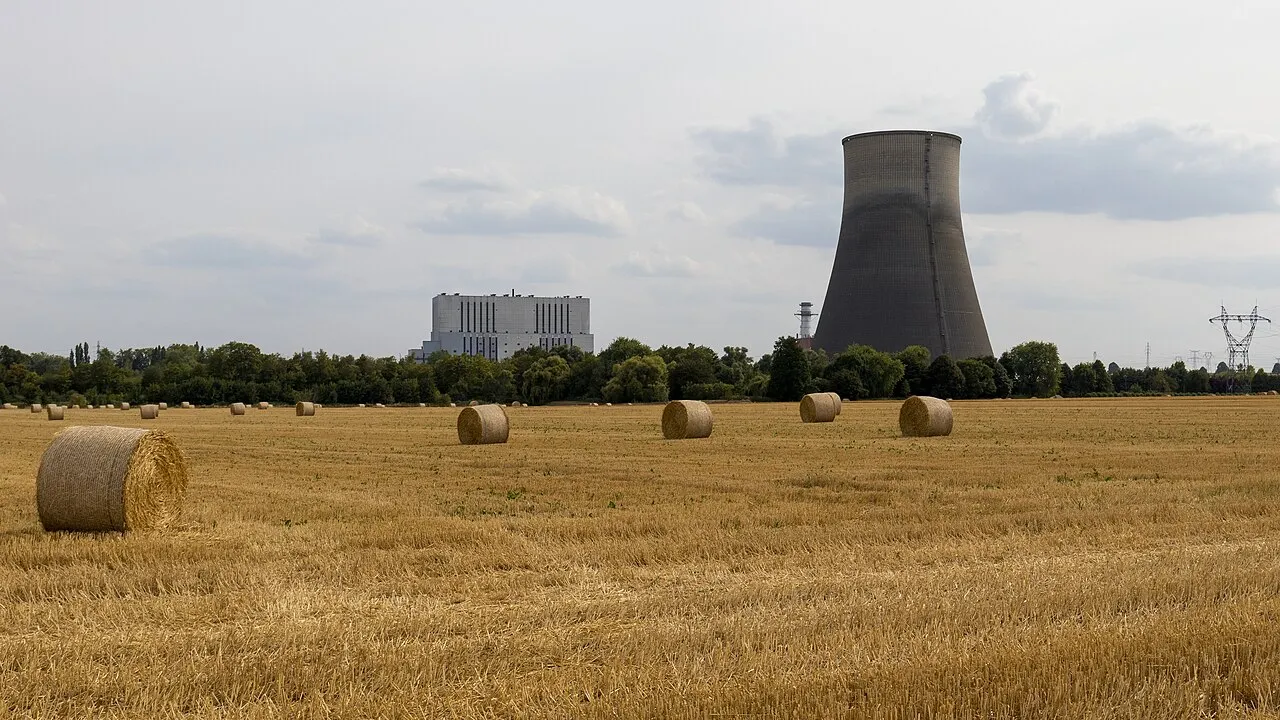
The EDF site in Bouchain (Nord), where SoftBank was selected for a 400 MW data center, in July 2026. Photo: JackyM59, CC BY-SA 3.0, via Wikimedia Commons.
What the site requires. The three sites are at the stage where the structuring choices are made: route and sizing of the 400 kV connection, location of the substations, cooling assumptions, permit applications. In Bouchain, converting a former power generation site raises specific questions: condition of existing structures, decontamination, possible reuse of the connection infrastructure. This is when owner's engineering and connection studies cost the least and save the most (see From substation to energisation: the stages of a high-voltage project).
3. Brookfield and Data4, Cambrai and Escaudain (Nord)
- Backer: the Canadian fund Brookfield, through the operator Data4.
- Locations: E-Valley, former Air Base 103 at Cambrai-Épinoy; Parc des Soufflantes, former Usinor site in Escaudain.
- Amount: up to €30 billion for both sites (Choose France 2026), compared with €20 billion announced at the AI Summit. More than €10 billion for Cambrai (Choose France 2025), €5 billion for Escaudain (Data4, June 2026).
- Capacity: at least 300 MW in the short term in Cambrai, up to 1 GW targeted; 700 MW on 33 ha in Escaudain.
- Jobs: nearly 4,000 direct and indirect jobs in Cambrai; in Escaudain, up to 1,000 during construction and 2,400 afterwards, presented as permanent by Data4 and as indirect by the Élysée press kit.
- Timeline: start of works in Cambrai announced for 2026; in Escaudain, studies and preliminary works over twelve months from June 2026.
- Progress: in Cambrai, the urban community voted again on the sale of the land in October 2026 because the project had changed (DCmag, in French); no building permit is known. Escaudain is one of RTE's fast-track connection sites.
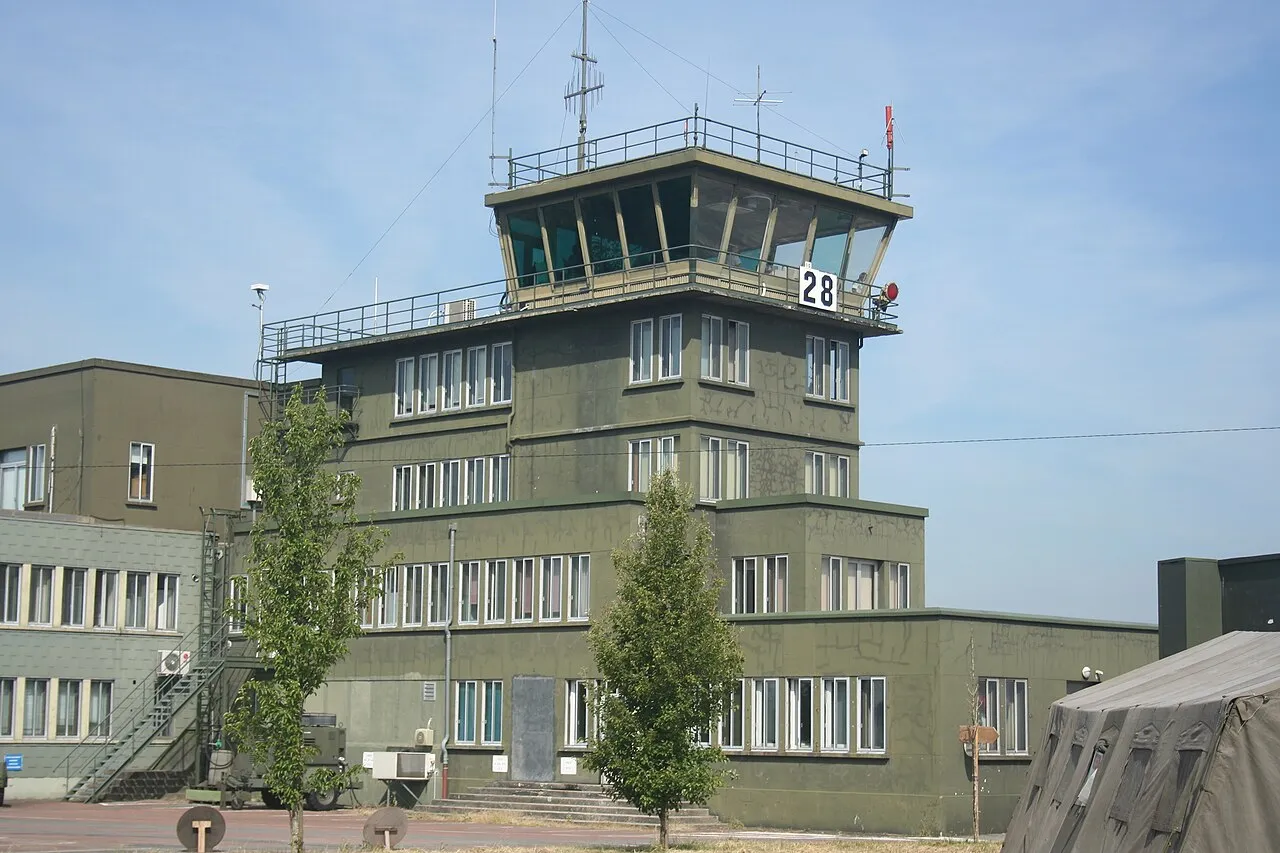
The control tower of Air Base 103 at Cambrai-Épinoy in 2010, when the base was still in service. The site now hosts the E-Valley project. Photo: Mike-tango, CC BY-SA 4.0, via Wikimedia Commons.
What the site requires. Two brownfields, two histories: an air base and a former steelworks. Before the first building, soils, buried networks and roads must be dealt with. On a campus that grows phase by phase up to a gigawatt, the electrical design must reserve from the outset the space for the transformers and substations of later phases, whose lead times run to several years (see Power transformers: why lead times are exploding).
4. Nebius, Béthune (Pas-de-Calais)
- Backer: Nebius (Netherlands), with Azur Datacenter for the building.
- Location: former Bridgestone brownfield, in Béthune.
- Amount: "more than €8bn of investment over several years" for cloud infrastructure and services, according to the Choose France 2026 press kit. The regional press quotes €1.5 billion for the conversion of the building, sometimes €1 billion. According to Reuters, construction is financed by Azur Datacenter and Nebius buys the chips: the gap is probably due to this split, which no source quantifies.
- Capacity: 240 MW targeted, in steps (around 27 MW, then 120 MW, then 240 MW in 2027 or 2028 according to Nord France Invest).
- Jobs: around 120 in the long run according to the Élysée; press figures range from about thirty direct jobs to 200 to 300 jobs including subcontracting.
- Progress: in June 2026, Nord France Invest still presented the project as planned. A partial commissioning in autumn 2026 has been reported by the regional press, without confirmation from the companies to date.
What the site requires. Béthune's bet is speed: reusing an industrial brownfield that is already connected to deliver initial capacity within a few months, then ramping up. This kind of schedule relies on engineering done very early: survey of existing assets, early ordering of long-lead equipment, detailed planning of tests so that one phase can be commissioned while the next is being built.
5. STMicroelectronics and GlobalFoundries, Crolles (Isère)
- Backers: STMicroelectronics and GlobalFoundries.
- Location: Crolles site, near Grenoble.
- Amount: €7.5 billion of projected total cost (GlobalFoundries, June 2023), after an announcement of €5.7 billion at the Choose France summit of July 2022; the European Commission uses €7.4 billion. Public aid of up to €2.9 billion under France 2030, announced by the Minister of the Economy in June 2023 (Siècle Digital, in French).
- Jobs: at least 1,000 full-time jobs under the commitment signed with the State.
- Progress: in January 2025, the press reported that the joint fab had been put on hold (eeNews Europe, citing Bloomberg). In April 2026, the Cour des comptes (French Court of Audit) noted that €574 million had been paid to STMicroelectronics by the end of June 2025 and nothing to GlobalFoundries, which, as of early November 2025, had made none of the planned investments; the Court speaks of a postponement, not a withdrawal. To our knowledge, no official withdrawal by GlobalFoundries has been announced.
What the site requires. A semiconductor fab is one of the most demanding industrial facilities there is: cleanrooms, very high-flow air handling, ultra-pure water, specialty gases, vibration control and a power supply of constant quality. The part already committed by STMicroelectronics falls under these packages; what comes next depends on an industrial decision, not a permit.
6. ProLogium, battery gigafactory, Dunkirk (Nord)
- Backer: ProLogium (Taiwan).
- Location: Port of Dunkirk, near the Gravelines nuclear power plant.
- Amount: €5.2 billion announced at Choose France 2023, for a 48 GWh plant. In 2023, the European Commission approved €1.5 billion of French aid for the project's research and development; its link to France 2030 is not confirmed by the sources consulted.
- Jobs: 3,000 announced in 2023.
- Timeline: according to the company, 0.8 GWh in 2028, 4 GWh in 2030, 12 GWh in 2032, then up to 48 GWh "depending on demand".
- Progress: groundbreaking on 10 February 2026; at the end of September 2026, the company announced the grid connection works and the energisation of the site for early October.
What the site requires. A battery cell plant operates in dry rooms, where air humidity is kept at a very low level: a heavy, energy-hungry air handling package that has to be designed together with the process. Starting at small capacity also changes the engineering: a profitable first phase has to be built while reserving the floor space, networks and electrical capacity of the following ones.
7. Microsoft, data centers in Alsace, Paris and Marseille
- Backer: Microsoft (United States).
- Locations: a new campus in Petit-Landau and Hombourg (Haut-Rhin), on around 36 ha along the Rhine, and the extension of the Paris and Marseille sites.
- Amount: €4 billion announced at Choose France 2024, of which more than €2 billion for the Alsace site according to the press at the time. The envelope also includes a training programme.
- Jobs: around 200 for the Alsace site according to Le Journal des Entreprises (May 2024).
- Timeline: sources differ, from a start of works at the end of 2027 with commissioning in 2029 to works "from 2029".
- Progress: after an unfavourable opinion from the environmental authority in March 2026 and a public inquiry in June, the prefect granted the environmental authorisation by order of 15 October 2026 (France 3 Grand Est, in French). Building permits are a matter for the two municipalities; opponents have announced appeals.
What the site requires. A data center campus on a greenfield site: connection to the transmission grid, an extra-high-voltage substation, then the complete electrical chain down to the halls. The opinions issued during the review focus on water, heat and energy: cooling design and waste heat recovery become permitting issues as much as technical ones (see Waste heat: how data centers are becoming district heating plants).
8. newcleo, advanced reactor and MOX fuel
- Backer: newcleo, whose head office has moved to Paris.
- Locations: test centre in Chusclan (Gard), near Marcoule; MOX fuel plant proposed in the Aube, near Nogent-sur-Seine.
- Amount: €3 billion over 2025-2030 announced at Choose France 2023. According to World Nuclear News (October 2026), the initial phase of the MOX plant represents €1.8 billion. newcleo is also a winner of the France 2030 call for projects on advanced reactors, for €25 million of aid shared with Naarea.
- Jobs: 100 jobs in France announced in 2023.
- Timeline: first line of the MOX plant planned for 2030; first reactor in France "from 2032", compared with 2030 announced in 2023.
- Progress: FASTER test centre, €10 million, opened in October 2026. No reactor construction has started.
What the site requires. A nuclear facility is built under a regime of its own: safety demonstration, equipment qualification, traceability of every weld and every test. A fuel plant adds nuclear containment and ventilation. These are rare skills, which the EPR2 sites will call on at the same time.
9. Digital Realty, Dugny (Seine-Saint-Denis) and Marseille
- Backer: Digital Realty (United States).
- Locations: Dugny campus; MRS5 site in Marseille.
- Amount: €2.3 billion confirmed at Choose France 2025, including €2 billion for Dugny and €300 million for MRS5. At the AI Summit, the company had announced more than €5 billion for 13 sites.
- Jobs: 550 direct and indirect jobs for Dugny, 200 for MRS5.
- Timeline: first 12 MW of the PAR15 building in Dugny delivered in 2027, for a campus of 176 MW of IT capacity in the long run (BeBeez, citing DCD). MRS5, 22 MW, delivery planned at the end of 2026.
- Progress: building permit for Dugny granted; construction of PAR15 started in December 2025.
What the site requires. This is one of the few very large data center projects under construction in Île-de-France. A campus of three successive buildings requires managing the interfaces between the general contractor, the technical packages and the operator, then repeated test campaigns at each delivery, without disturbing halls already in use.
10. Neomat, cathode materials, Gravelines and Loon-Plage (Nord)
- Backers: XTC New Energy (China, 51%) and Orano (49%).
- Location: Port of Dunkirk, straddling Gravelines and Loon-Plage.
- Amount: €1.5 billion announced at Choose France 2023. The first phase, decided on 4 March 2026, represents around €500 million (AFP, in French).
- Jobs: 400 direct jobs at opening according to AFP; other sources quote 1,300 jobs on the site in the long run.
- Timeline: first production at the end of 2028, compared with the end of 2026 announced in 2023; 40,000 tonnes a year, 80,000 considered depending on the market.
- Progress: construction started on 29 May 2026.
What the site requires. A materials chemistry plant: calcination furnaces, powder handling, effluent treatment, process safety. The site is the first phase of a larger complex, which means reserving now the footprint and networks of what follows.
11. H4 Marseille Fos, synthetic aviation fuel, Fos-sur-Mer (Bouches-du-Rhône)
- Backers: Hy2gen and H2V.
- Location: Fos-sur-Mer industrial port zone.
- Amount: around €1.5 billion at Choose France 2025; €1.5 to 1.7 billion according to the CNDP guarantors' report of June 2026 (in French).
- Jobs: 165 direct jobs.
- Timeline: start of construction in 2028, operation at the end of 2030, full commercial operation in early 2032. The 2025 announcement targeted 2030.
- Progress: land increased to 46 ha; supply contract with EDF for around 150 MW of nuclear electricity from 2032; filing of the environmental authorisation application announced for September 2026, not confirmed. The guarantors stress the dependence on the schedule of the 400 kV line planned in the area, which is contested by associations.
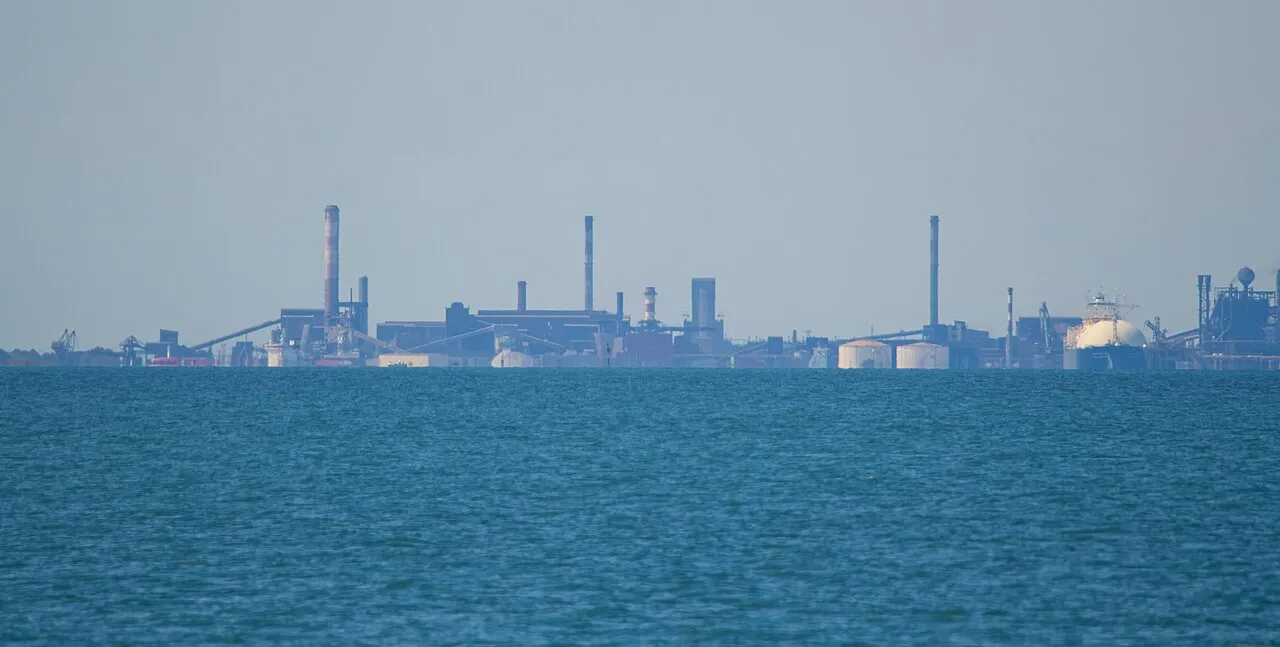
The industrial coastline near Fos-sur-Mer, where H4 Marseille Fos and the Marcegaglia steelworks are being prepared. Photo: Olivier Dugornay (Ifremer), CC BY 4.0, via Wikimedia Commons.
What the site requires. Producing 75,000 tonnes of fuel a year from electricity means, first of all, a very large electrolysis plant, and therefore a high-voltage connection and a high-power conversion chain. The project shows how much decarbonised industry depends on the grid: no line, no plant (see Grid connection: why industrial projects are waiting, and what is changing).
12. Vicat, CO2 capture, Montalieu-Vercieu (Isère)
- Backer: Vicat.
- Location: Montalieu-Vercieu cement plant.
- Amount: €1.5 billion in total, of which around €700 million borne by Vicat (Le Journal des Entreprises, February 2026, in French); €331 million of aid under the major industrial decarbonisation projects tender, funded by France 2030 and the State budget.
- Jobs: not published.
- Timeline: final investment decision planned for the end of 2027.
- Progress: selected in February 2026; project to capture 1.2 million tonnes of CO2 a year.
What the site requires. Grafting a capture unit onto an operating cement plant: flue gas treatment, CO2 compression, new utilities (steam, electricity, cooling), then CO2 export. The works take place on a site that never stops, which puts the coordination and safety of interventions at the heart of the job.
13. ArcelorMittal, electric furnace, Dunkirk (Nord)
- Backer: ArcelorMittal France.
- Location: Dunkirk steelworks.
- Amount: €1.3 billion for an electric furnace of 2 million tonnes a year, confirmed on 10 February 2026, 50% financed by energy savings certificates. The initial project, two furnaces and a direct reduction unit for €1.8 billion, benefited from France 2030 aid of up to €850 million (agreement of January 2024); it had been suspended at the end of 2024.
- Jobs: not published for this project.
- Timeline: works launched in April 2026 for 42 months; first steel in the second half of 2029.
- Progress: €300 million already committed in October 2026 (Le Journal des Entreprises, in French); public consultation on the authorisations opened on 15 October 2026.
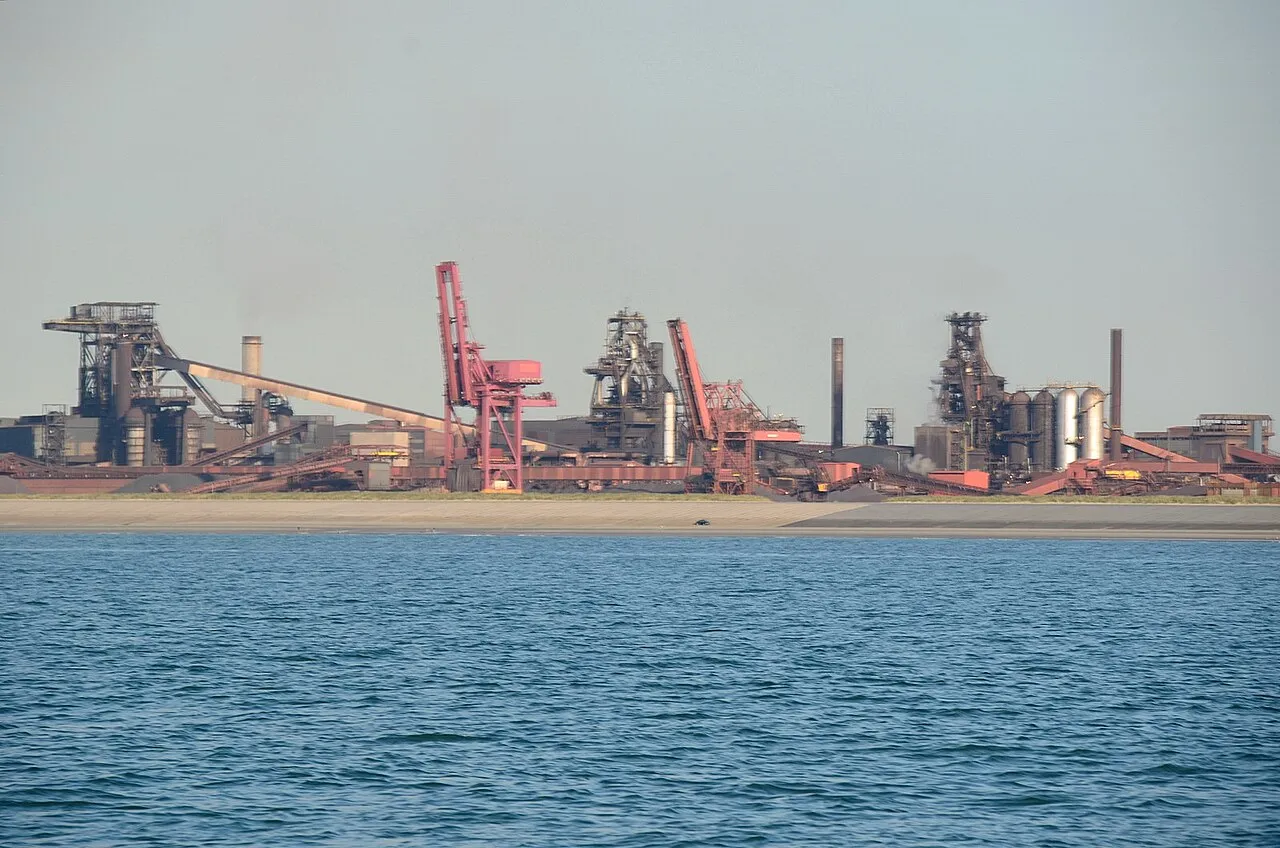
The blast furnaces of the ArcelorMittal plant in Dunkirk in 2014. Photo: Franz-Josef Molitor, CC BY 2.0, via Wikimedia Commons.
What the site requires. An arc furnace is one of the harshest electrical loads there is: very high power demand and rapid variations that disturb the grid. It needs a robust extra-high-voltage connection, compensation and filtering equipment, and integration into a plant that keeps producing with its blast furnaces (see Electrifying a factory: what decarbonisation changes on the electrical side).
14. FertigHy, low-carbon fertiliser, Languevoisin-Quiquery (Somme)
- Backer: FertigHy.
- Location: around 20 ha in Languevoisin-Quiquery, on land owned by the Noriap cooperative.
- Amount: €1.3 billion announced at Choose France 2024.
- Jobs: 250.
- Timeline: 500,000 tonnes of low-carbon fertiliser a year by 2030; investment decision and start of works announced for 2027.
- Progress: according to the CNDP guarantor (June 2026, in French), the public inquiry should not take place for another nine to twelve months. In July 2026, the project was selected in the first round of the support mechanism for low-carbon hydrogen production, for 95.3 MW out of 200 MW.
What the site requires. A hydrogen-based fertiliser plant combines a high-power electrolyser, ammonia synthesis and classified storage. The permit application, hazard studies and grid connection drive the schedule far more than the civil works.
15. Marcegaglia, steelworks, Fos-sur-Mer (Bouches-du-Rhône)
- Backer: Marcegaglia (Italy).
- Location: Fos-sur-Mer industrial port zone.
- Amount: around €1.2 billion in total, including €600 million of additional investment announced at Choose France 2026, for the first steelworks built in France in more than fifty years according to the Élysée press kit.
- Jobs: more than 1,000 direct and indirect jobs.
- Timeline: final investment decision at the end of 2026, start of works at the end of the year, commissioning in early 2029.
- Progress: building permit and environmental authorisation application filed at the end of May and on 1 June 2026, public inquiry expected (Marcegaglia newsletter, June 2026, in French). The project has been recognised as being of major national interest.
What the site requires. The same issues as Dunkirk, on a new site: connection of a heavy electrical load, voltage quality, industrial utilities, and a tight schedule between the investment decision and commissioning.
Just below the ranking
Five projects follow, below €1 billion or just above: Telehouse's three data centers (€1 billion, Choose France 2024), whose Les Pennes-Mirabeau site is under appeal; the HoloSolis photovoltaic gigafactory in Hambach (Moselle), announced at €710 million in 2023 and revised to €850 million, whose groundbreaking has not been confirmed; Equinix's data centers (€630 million, 2024); Axens' cathode materials plant in Saint-Saulve (Nord), cut from €600 million to around €500 million; and Air Liquide's Normand'Hy electrolyser in Port-Jérôme (Seine-Maritime), more than €450 million including €190 million of public aid from the recovery plan and France 2030, whose commissioning was expected during 2026.
Those that do not make the ranking
No published municipality. Several very large announcements do not yet have a public site: Prologis (€6.4 billion, including around €1 billion for logistics, for four data centers in the Paris region), Amazon Web Services (€6 billion by 2031 for its cloud infrastructure), the second site of the AI campus (around €7.5 billion, under selection), Verne and Ardian (up to €5 billion for 500 MW in Île-de-France) and Phoenix Group with DC Max (up to €4 billion, with a first 18 MW campus in the Lyon area).
Abandoned. Fluidstack's 1 GW supercomputer, announced for €10 billion at the 2025 AI Summit, was abandoned in March 2026 according to Bloomberg; its Le Bosquel site has been taken over by SoftBank and Sesterce. Carbon's photovoltaic giga-factory in Fos-sur-Mer, €1.5 billion, was officially abandoned on 19 May 2026 for lack of full financing.
Already built. Some State-backed projects came out of the ground before the period: the Verkor gigafactory in Bourbourg, opened in December 2025, the AESC plant in Douai, in production since June 2025, and ACC's plant in Billy-Berclau and Douvrin, ramping up. Their extensions are still to come.
EPR2: outside the scope, but on another scale
The programme of six EPR2 reactors, at Penly, Gravelines and Bugey, falls under neither Choose France nor France 2030. Yet it sets the scale: in December 2025, EDF costed it at €72.8 billion (in 2020 euros), more than any project in the ranking except the AI campus. The final investment decision is targeted for the end of 2026, but on 31 March 2026 the European Commission opened an in-depth investigation into the public financing. First concrete at Penly is announced for the end of 2028 and commissioning of the first reactor for 2038.
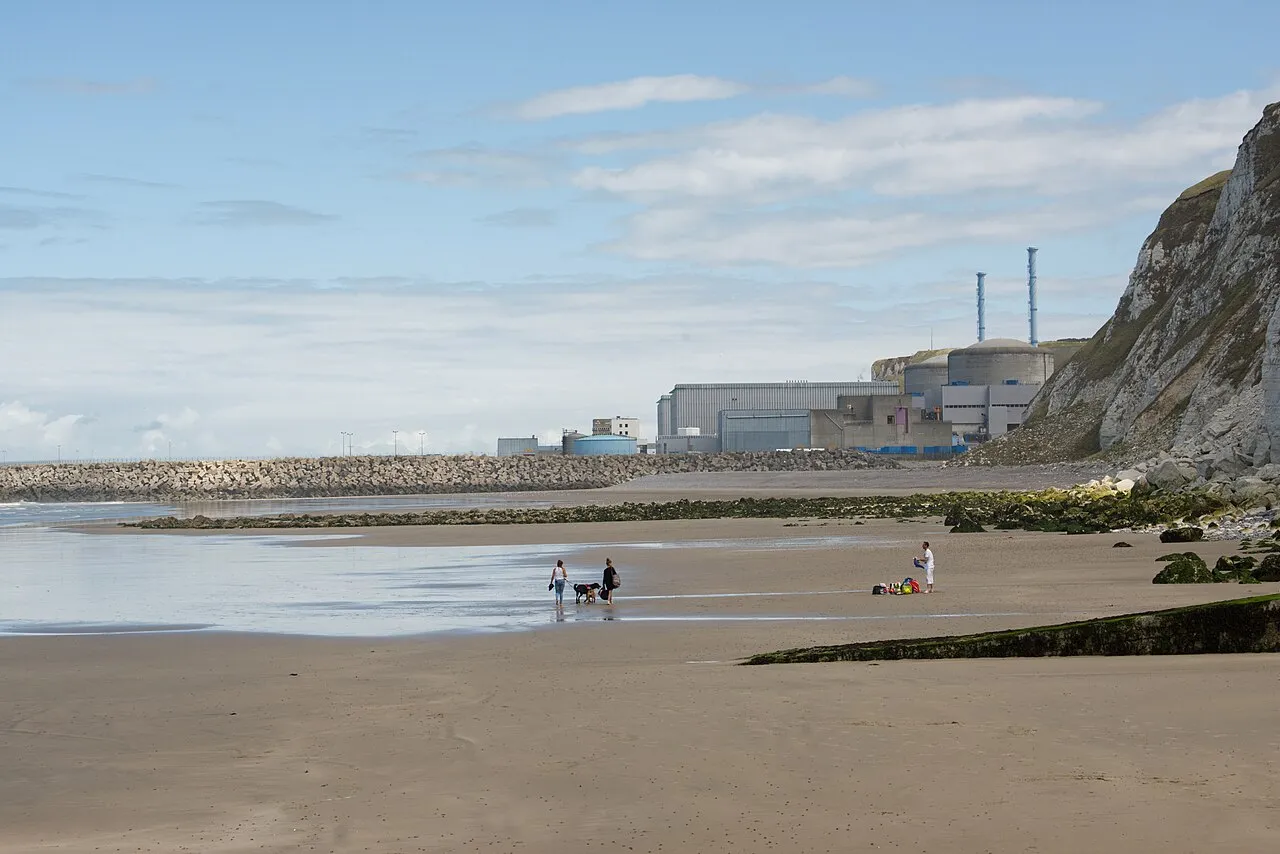
The Penly plant (Seine-Maritime) in 2017. The first EPR2 is due to be commissioned there. Photo: Maarten Heerlien, CC BY 2.0, via Wikimedia Commons.
What these sites have in common
Electricity first. Almost every project in the ranking starts with a connection to the high-voltage grid: 400 kV links, new substations, transformers. It is often this connection, more than the permit, that sets the commissioning date. RTE's fast-track connection sites (Le Bosquel, Escaudain, Fouju, the Port of Dunkirk, the former Montereau power plant) also outline the map of the next construction sites (see Access to power, the new bottleneck for data centers).
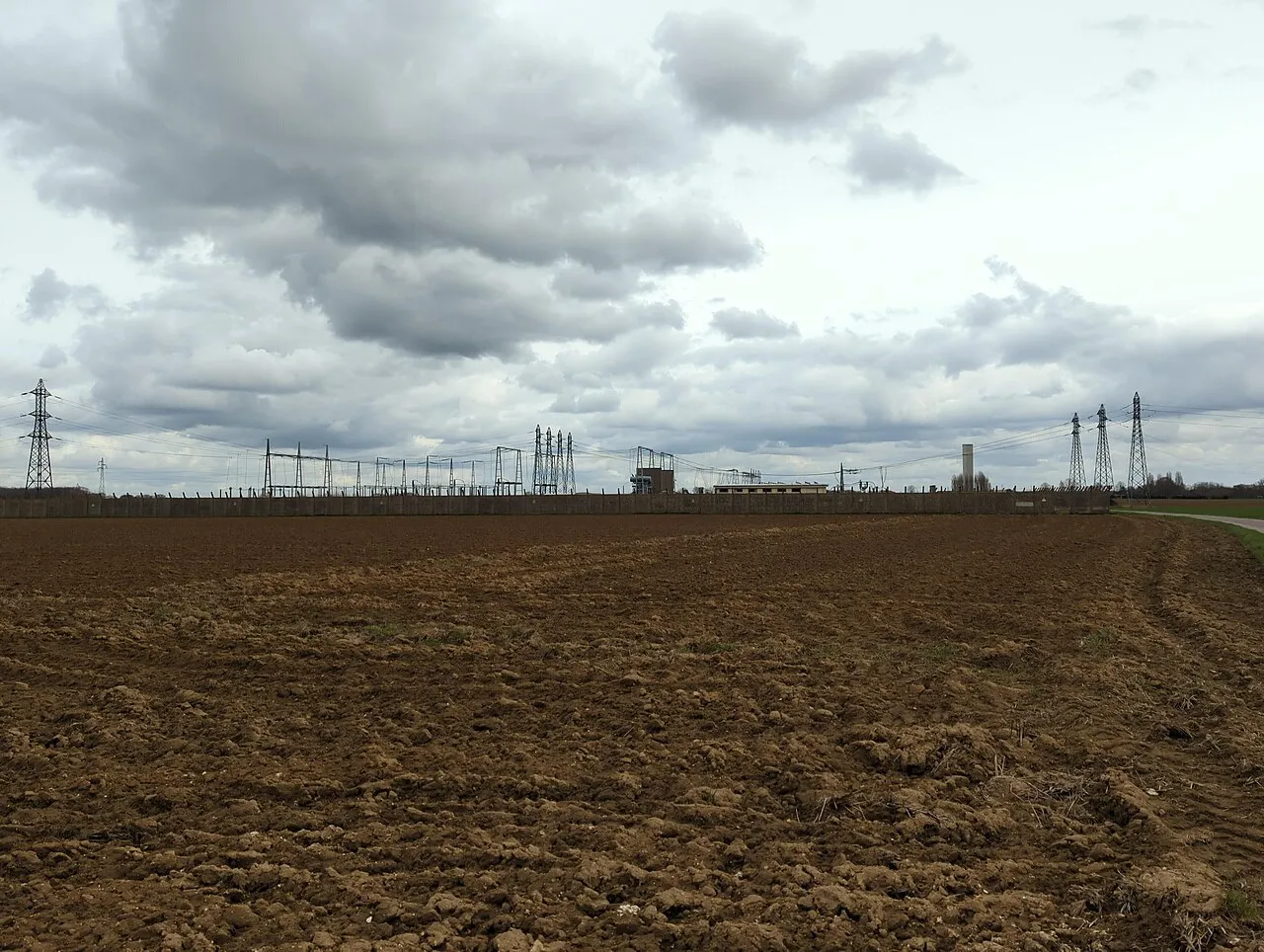
The RTE substation at Saint-Pierre-de-Bailleul (Eure) in 2023: the kind of structure each of these projects starts with. Photo: Matthieu Bessat (Matthieu2743), CC BY-SA 4.0, via Wikimedia Commons.
Two regions account for most of it. Hauts-de-France, around Dunkirk and Valenciennes, and Île-de-France host most of the amounts; Fos-sur-Mer is the third hub, for steel and synthetic fuels.
Slipping schedules. Almost all the projects announced in 2023 have slipped by two years or reduced their first phase. The data centers of 2025 and 2026 are now entering the permitting and appeals phase in turn.
The same skills, at the same time. These projects will be looking, at the same time, for engineers in high- and low-voltage electrical systems, HVAC, commissioning, construction management and quality, in areas sometimes far from the usual labour pools. These are the disciplines in which Miles Group supports project owners and contractors, in industrial construction, data centers and critical infrastructure.
Frequently asked questions
What is the largest project announced under Choose France?
By amount for an identified site, the Fouju AI campus (Seine-et-Marne), backed by MGX, Bpifrance, Mistral AI and Nvidia: up to €50 billion under the framework agreement of February 2025, confirmed at the Choose France 2025 summit. The largest announcement by a single company remains SoftBank's in 2026: up to €75 billion for 5 GW in France, including €45 billion for three sites in Hauts-de-France.
Are the amounts announced at Choose France actual investments?
No. They are investment intentions over several years, announced by the companies. Some are carried over from one summit to the next, others are later reduced or abandoned: the ProLogium gigafactory starts at 0.8 GWh instead of the 48 GWh announced, the Neomat plant commits around €500 million out of €1.5 billion, and the €10 billion Fluidstack supercomputer has been abandoned.
What is the difference between Choose France and France 2030?
Choose France is an annual summit where the French State presents investments announced by companies, mostly foreign ones: this is private money. France 2030 is a €54 billion public investment plan launched in October 2021, which subsidises industrial projects such as the Crolles semiconductor plant or Vicat's CO2 capture project. The same project can fall under both.
Sources
- Élysée, Choose France 2023 press kit (in French)
- Élysée, Choose France 2024 press kit (in French)
- Élysée, Choose France 2025 press kit (in French)
- Élysée, Choose France 2026 press kit (in French)
- Élysée, AI Action Summit press kit (February 2025)
- French Ministry of the Economy, France 2030 (in French)
- DGE, winners of the major industrial decarbonisation projects tender (12 February 2026, in French)
- CNDP, Le Bosquel AI Factory (in French)
- CNDP, computing centre at the Port of Dunkirk (in French)
- DCmag, prefectoral approval of the Fouju AI campus (in French)
- Brie des Rivières et Châteaux community of municipalities, AI campus timeline (September 2026, in French)
- EDF, SoftBank selected for the Bouchain site (30 May 2026)
- Data4, new campus in Escaudain (June 2026)
- GlobalFoundries, agreement with STMicroelectronics for Crolles (June 2023)
- Cour des comptes, support for the semiconductor industry (April 2026, in French)
- ProLogium, groundbreaking of the Dunkirk gigafactory
- Le Journal des Entreprises, ArcelorMittal commits €300 million in Dunkirk (in French)
- EDF, cost estimate of the EPR2 programme (18 December 2025, in French)
Read also
Data centers in France: a map of the major projects in 2026
France has become one of Europe's largest data center construction sites. Around 350 sites are in operation, and a new generation of campuses dedicated to artificial intelligence, ranging from several hundred megawatts to more than a gigawatt, is being prepared in Île-de-France and Hauts-de-France. Here is where they are being built, who is behind them and when they are due to open.
Read the article
€109 billion for AI: where is data center money going in France?
In February 2025, France announced €109 billion of investment in artificial intelligence. Eighteen months later, announcements have multiplied, from SoftBank to Brookfield. But an investment pledge is not a data center. A look at who is funding what, and at what building a site really costs.
Read the article
Grid connection: why industrial projects are waiting, and what is changing
More than 200 industrial projects are waiting for a connection to the French high-voltage grid. Their combined demand is close to three times the current consumption of French industry. For a project owner, grid connection has become a strategic question, to be asked when choosing the site.
Read the article