
Grid connection: why industrial projects are waiting, and what is changing
More than 200 industrial projects are waiting for a connection to the French high-voltage grid. Their combined demand is close to three times the current consumption of French industry. For a project owner, grid connection has become a strategic question, to be asked when choosing the site.
Contents
Demand that outgrows the existing grid
French electricity is 95% low-carbon, and the country exports a large share of it every year. Yet 60% of the energy consumed in France still comes from fossil fuels, mostly imported. Replacing gas and oil with electricity in factories is therefore one of the decade's major undertakings.
The trend shows in RTE's connection queue. In summer 2026, more than 200 industrial projects, totalling close to 33 GW, were waiting for a high-voltage connection. That is close to three times the current consumption of all French industry. The queue includes electrolysers, steel and chemical sites going electric, battery plants and data centers.
Why connection takes time
Connecting a site of several tens of megawatts is not just a matter of running a cable. It often means building or extending a substation, reinforcing lines and sometimes building new ones. Each asset goes through grid studies, permitting and works, then testing before energisation.
The queue adds its own difficulty: some requests will never materialise. As long as an uncertain project holds a place, it blocks capacity that a project ready to start could use.
"First ready, first served"
This is exactly what RTE wants to fix. By the end of 2026, the historic "first come, first served" rule gives way to "first ready, first served". In practice, capacity goes first to projects that can show progress: secured land, permits, financing, a credible schedule.
For a project developer, the message is clear: a solid connection file, backed by serious studies and a schedule that holds, becomes a competitive advantage.
"Ready-to-connect" zones
The second lever is to reinforce the grid before projects are signed, where they cluster. RTE plans to triple the hosting capacity of the Dunkirk, Le Havre and Fos industrial port hubs, with 9 GW more by 2029. Five mid-sized industrial zones, including south Île-de-France, south Alsace and Port-la-Nouvelle, are to gain another 5 GW.
These advance reinforcements are part of the grid development plan, which provides for €94 billion of investment by 2040 and a tripling of RTE's annual investment rate by 2030.
What it means for a project owner
Grid connection is no longer an end-of-project formality. It shapes the choice of site, the phasing of works and the commissioning date. Three reflexes follow:
- ask the grid question before the land question: available capacity, priority zones, announced lead times;
- structure the interface with the grid operator: a single technical contact, up-to-date power and power-quality studies, a shared schedule;
- prepare the customer substation in parallel: its engineering, procurement and testing must not become the critical path once the connection is granted.
These are very practical electrical engineering skills: high-voltage substations, grid studies, interface management and commissioning. They now sit at the heart of reindustrialisation.
Frequently asked questions
How many industrial projects are waiting for a high-voltage connection in France?
According to RTE, more than 200 industrial projects, totalling close to 33 GW, were waiting for a high-voltage grid connection in summer 2026.
What does "first ready, first served" mean?
It is the new queue-management principle RTE announced for the end of 2026: grid capacity goes first to the most advanced projects, rather than to those that applied first.
What is a "ready-to-connect" zone?
An area where RTE reinforces the grid in advance, before each project is signed, so that it can connect the industrial sites that settle there faster. The Dunkirk, Le Havre and Fos hubs are among them.
Sources
Read also
Access to power, the new bottleneck for data centers
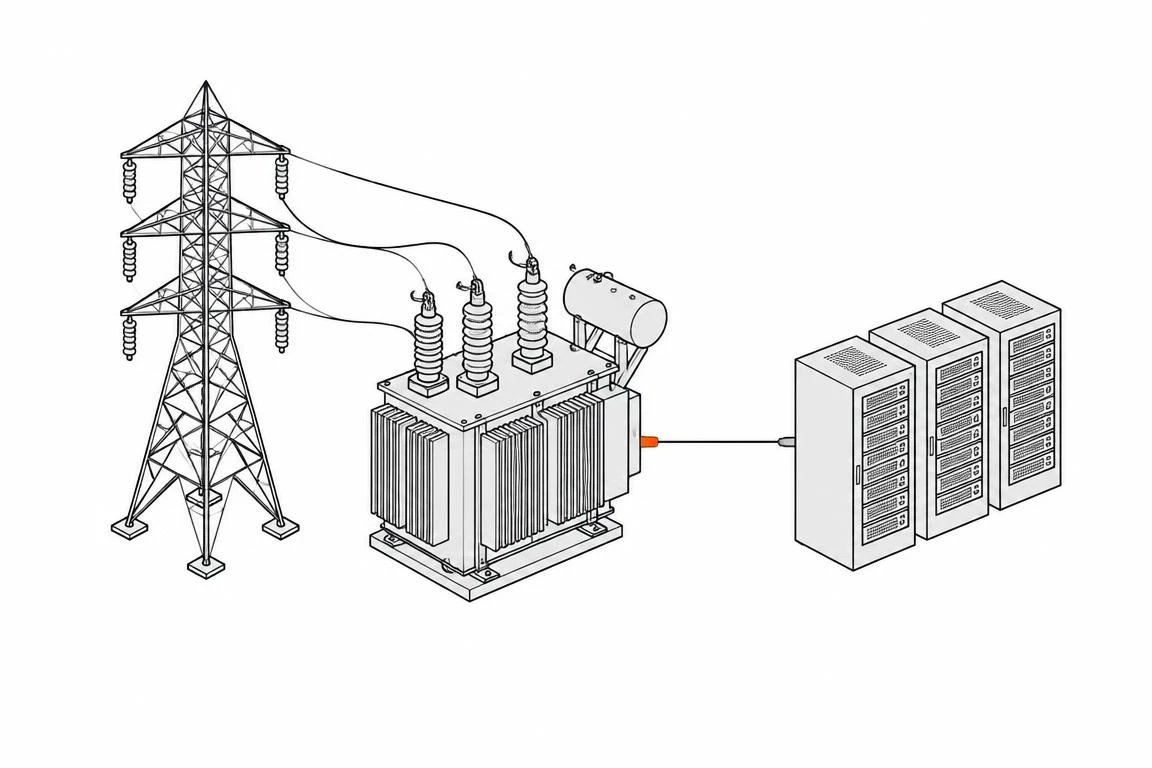
France produces more electricity than it consumes. Yet getting a grid connection has become the longest and most contested step of a data center project. In eighteen months, the capacity these projects have reserved with RTE has more than tripled.
Read the article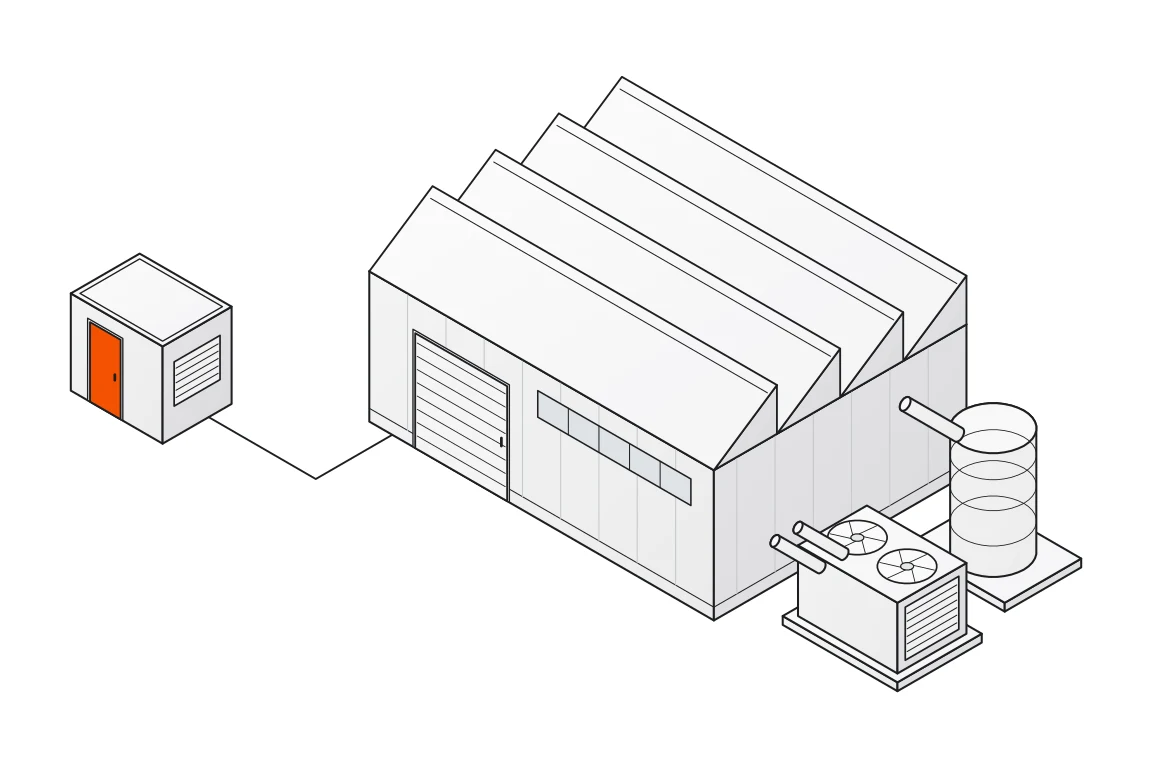
Electrifying a factory: what decarbonisation changes on the electrical side
To decarbonise a factory, the first step is to replace fossil fuels with electricity. On paper, it is a change of energy. On site, it is a new electrical project: power multiplied, a customer substation to rethink, a grid connection to negotiate, power quality to control.
Read the article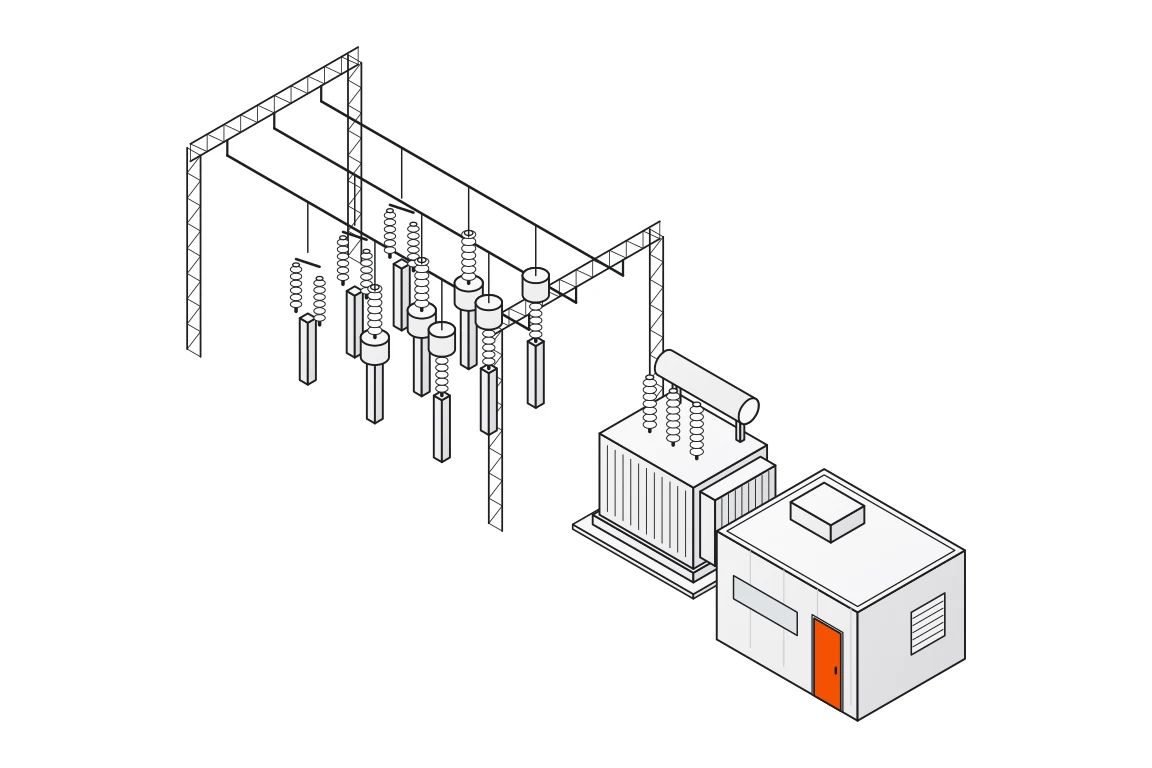
From substation to energisation: the stages of a high-voltage project
A high-voltage substation connects a transmission line to an industrial site, a renewable plant or the distribution grid. Building one involves a dozen trades, from grid studies to commissioning tests. Here are the main stages, and the points where a project gains or loses months.
Read the article