
Electrifying a factory: what decarbonisation changes on the electrical side
To decarbonise a factory, the first step is to replace fossil fuels with electricity. On paper, it is a change of energy. On site, it is a new electrical project: power multiplied, a customer substation to rethink, a grid connection to negotiate, power quality to control.
Contents
The paradox to solve
France produces electricity that is 95% low-carbon. Yet 60% of the energy it consumes still comes from fossil fuels, largely imported. In industry, process heat and some feedstocks are what mainly rely on gas, oil or coal.
Electrifying these uses is therefore one of the most direct decarbonisation levers. RTE puts it at the heart of its strategy, and its 2025 Adequacy Report estimates that industrial consumption could reach about 113 TWh a year if 60% of identified projects are completed by 2030.
What gets electrified
- Low- and medium-temperature heat: industrial heat pumps, electric or electrode boilers, mechanical vapour recompression.
- Furnaces: induction, resistance, electric arc for steelmaking.
- Hydrogen: electrolysers to replace hydrogen made from natural gas.
- Drives: motors and variable speed drives replacing turbines or combustion engines.
Some sectors face even heavier needs. In cement, for example, capturing CO2 at the kiln outlet would more than double the industry's electricity consumption, according to its roadmap.
What it changes on site
On paper, you change energy. On the ground, you start a full electrical project.
Power demand changes scale. Replacing a gas boiler of several megawatts with electrical equipment can multiply a site's contracted power. The existing transformer, switchboards and cables are no longer enough.
The customer substation needs rethinking. A site connected at medium voltage may need to move to high voltage, with a new substation, new protection and a new agreement with the grid operator.
Grid connection becomes a schedule issue. More than 200 industrial projects, totalling close to 33 GW, are waiting for a high-voltage connection, according to RTE. The connection file must be started early and be well documented.
Power quality degrades if left unchecked. Arc furnaces, electrolysers and drives generate harmonics, fluctuations or large inrush currents. They have to be studied, compensated and kept within the limits set by the grid operator.
The protection scheme changes. New short-circuit levels, new discrimination, new automation: the site's electrical architecture has to be reviewed as a whole.
A four-step method
- Draw up the energy and electrical balance: which uses to electrify, at what power, with what load profile.
- Study the internal network and the connection: existing capacity, power scenarios, consultation of the grid operator.
- Design the new substation and distribution: transformers, switchboards, protection, power quality, building in procurement lead times.
- Phase the works: electrify without stopping production, which means prepared switchovers and rigorous testing.
Electrifying a factory is therefore less an equipment purchase than a complete electrical engineering project, from grid study to commissioning.
Frequently asked questions
Why electrify industrial processes?
Because French electricity is 95% low-carbon, while 60% of the energy consumed in the country still comes from fossil fuels. Replacing gas or oil with electricity directly cuts a site's emissions.
Which processes can be electrified?
Low- and medium-temperature heat (heat pumps, electric boilers), some furnaces (induction, electric arc, resistance), hydrogen production by electrolysis and many mechanical drives.
What needs to be planned on the electrical side?
A power study, a review or redesign of the customer substation, a connection request to the grid operator, power-quality studies (harmonics, voltage dips) and an updated protection scheme.
Sources
Read also
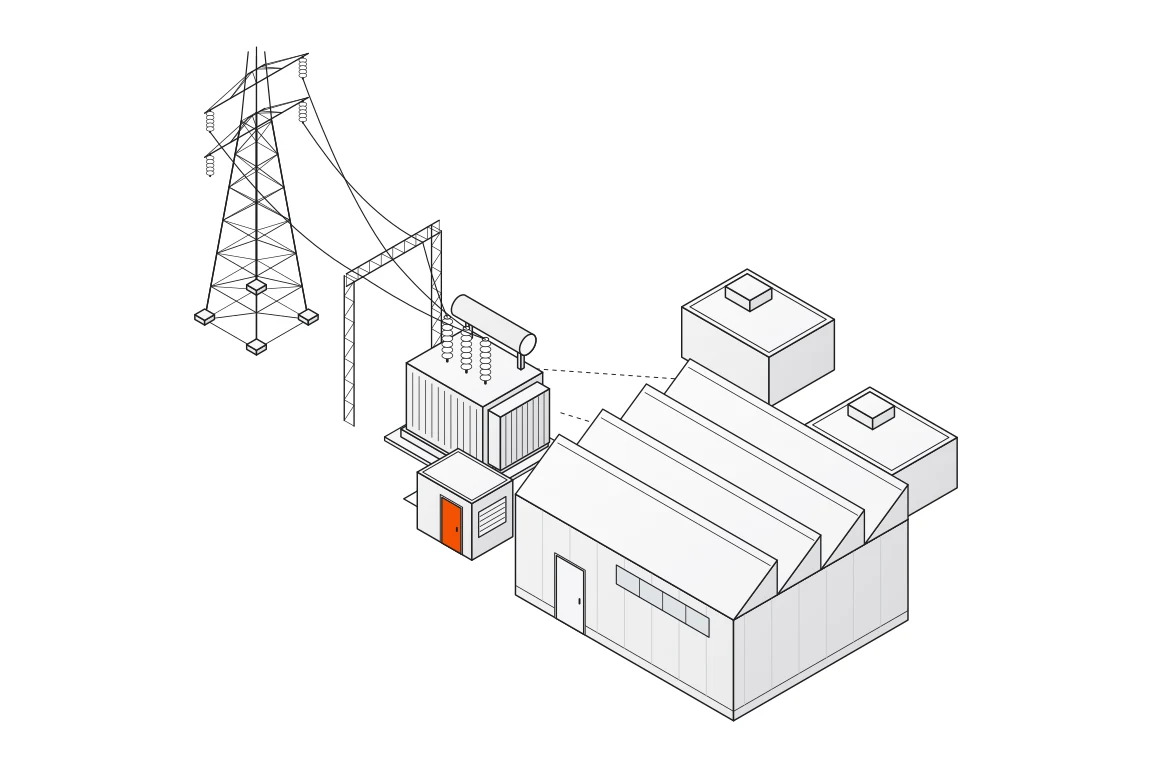
Grid connection: why industrial projects are waiting, and what is changing
More than 200 industrial projects are waiting for a connection to the French high-voltage grid. Their combined demand is close to three times the current consumption of French industry. For a project owner, grid connection has become a strategic question, to be asked when choosing the site.
Read the article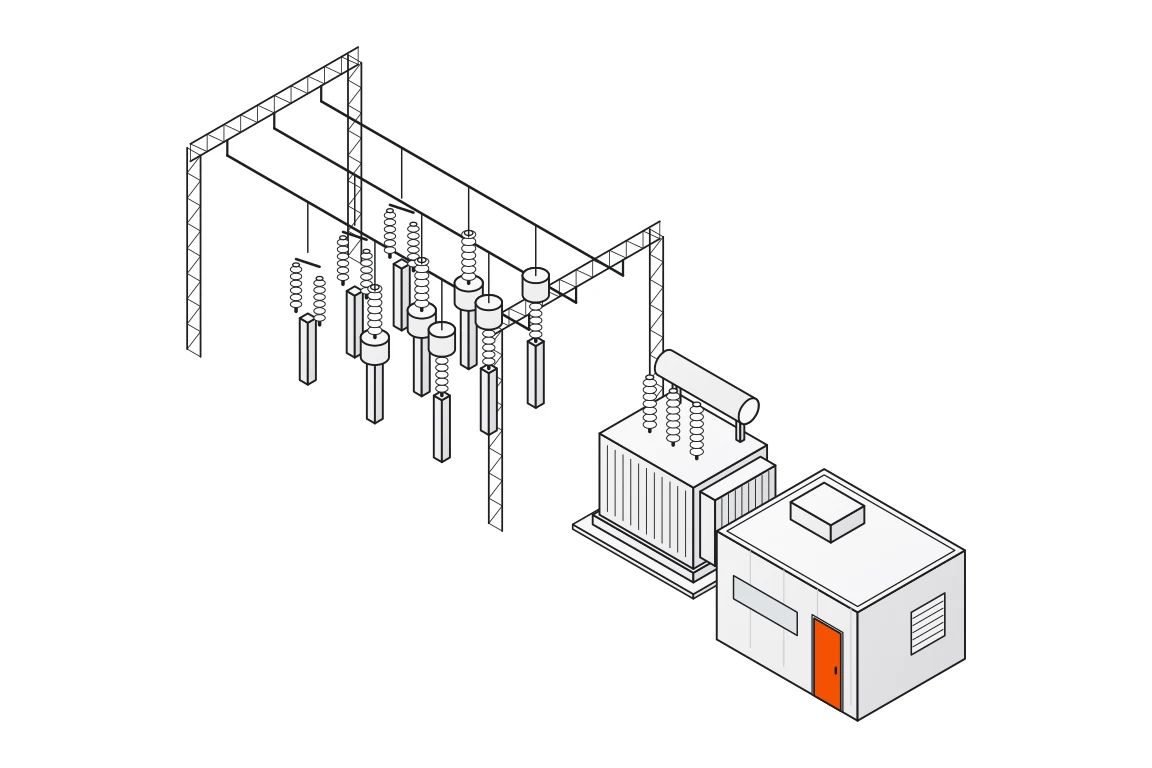
From substation to energisation: the stages of a high-voltage project
A high-voltage substation connects a transmission line to an industrial site, a renewable plant or the distribution grid. Building one involves a dozen trades, from grid studies to commissioning tests. Here are the main stages, and the points where a project gains or loses months.
Read the article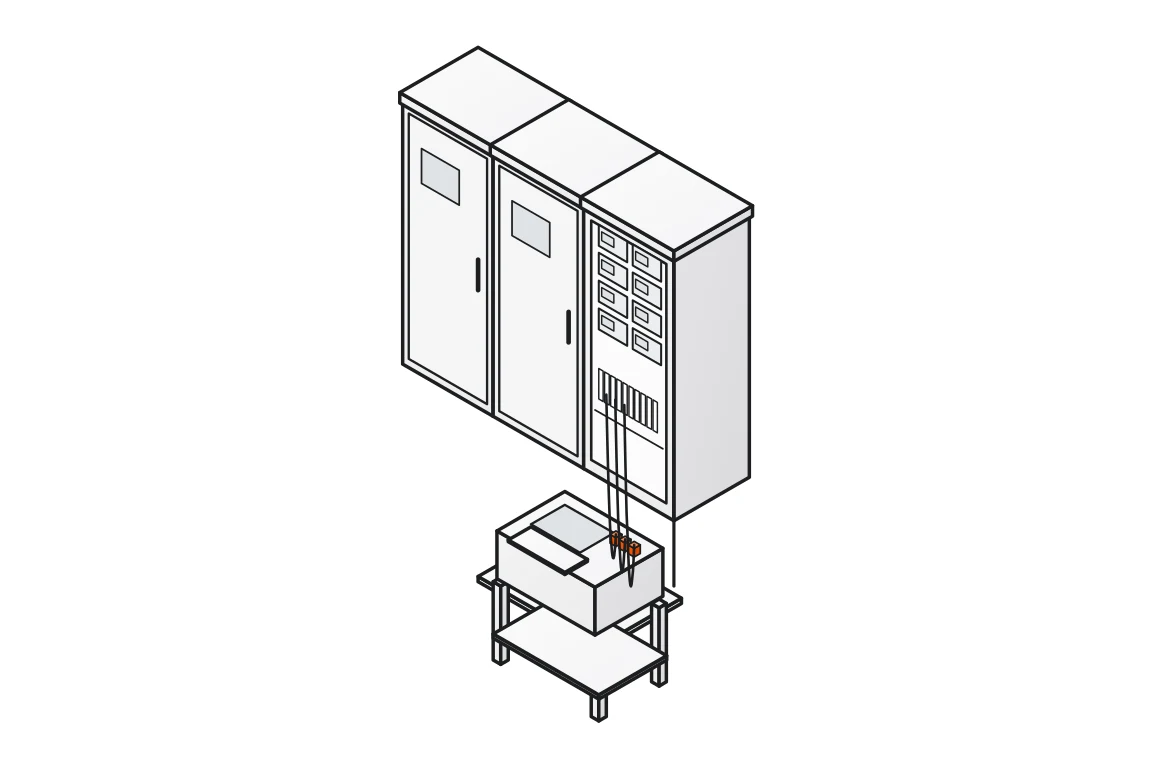
Testing and commissioning electrical installations: a profession of its own
Between the end of erection and the first energisation lies a phase that goes unnoticed when it goes well: testing. Yet this is where everything that was designed, built and wired is verified. The test engineer is its guarantor.
Read the article