
Access to power, the new bottleneck for data centers
France produces more electricity than it consumes. Yet getting a grid connection has become the longest and most contested step of a data center project. In eighteen months, the capacity these projects have reserved with RTE has more than tripled.
Contents
The French paradox: plenty of electricity, few connections
France has abundant and largely low-carbon electricity. In 2025, it exported a record volume of electricity to its neighbours. This is in fact one of the main arguments for attracting data centers.
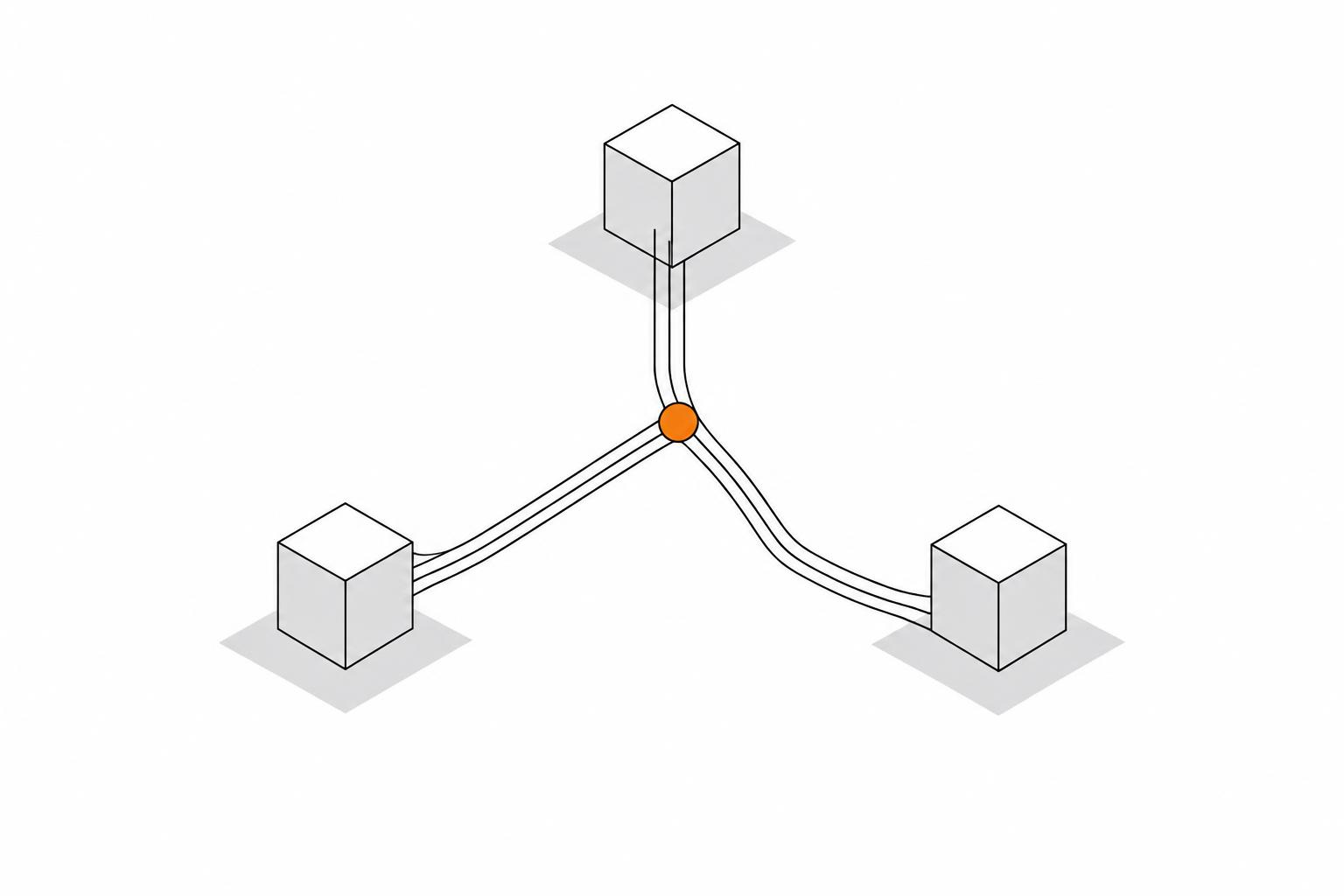
But producing electricity is not enough: it has to be delivered to the site. An AI campus of several hundred megawatts must be connected to the extra-high-voltage transmission grid, with a dedicated substation and sometimes new lines. These assets require studies, permits and works that take years. RTE, the French transmission system operator, mentions high-voltage connection lead times of two to seven years depending on the area.
A queue that is exploding
RTE's figures show the scale of the phenomenon. At the end of 2024, some forty data center projects represented around 5 GW of signed connection requests. In May 2026, there were around 80 projects and close to 18 GW reserved. The total capacity sought by the sector reaches around 28.6 GW, only part of which is backed by firm commitments.
At the same time, only eight data centers were connected to the high-voltage grid, for a combined 800 MW. More broadly, close to 33 GW of industrial projects across all sectors were waiting for a high-voltage grid connection in July 2026, with data centers accounting for the largest share.
In Île-de-France, the capacity requested by data centers is already approaching the average power consumed by the whole region. This is what is pushing projects towards Hauts-de-France, the Rhône valley or port areas.
Fast track: connecting a gigawatt in three to four years
To avoid losing the largest projects, RTE has set up an accelerated connection procedure, which came out of the AI Summit of February 2025 and was approved by the French Energy Regulatory Commission (CRE). Five sites have been identified, two in Île-de-France and three in Hauts-de-France, each able to host 700 MW to 1 GW within three to four years. The first contract was signed in January 2026 with the Fouju AI campus, for a ramp-up to 1,400 MW.
RTE is also prioritising grid reinforcement in the large industrial port areas (Dunkirk, Le Havre, Fos-sur-Mer) and five intermediate industrial zones, including the south of Île-de-France and Valenciennes-Maubeuge.
Reserving is not consuming
One point is often misunderstood: reserved capacity is not consumed capacity. Operators install servers gradually, as their customers arrive. According to the main operators, it would take ten to fifteen years to reach around 80% of the consumption matching the capacity requested. RTE also observes that data centers connected in recent years use on average only around 20% of their reserved capacity.
The consequence: reserving "generously" ties up grid capacity that could serve other projects, industrial ones in particular. This is one of the ongoing debates about allocation rules.
What this changes on the ground
For a project owner, grid connection is no longer a formality at the end of the project: it is the first question to ask, even before land. It shapes the choice of site, the phasing of works and the commissioning schedule. On the engineering side, it calls for specific skills: high-voltage substations, medium-voltage distribution, grid studies, coordination with RTE and Enedis, and management of the interfaces between the substation and the building.
Frequently asked questions
How much capacity are data centers requesting from RTE?
In May 2026, RTE, the French transmission system operator, had reserved close to 18 GW of connection capacity for around 80 projects. Total demand expressed by the sector reaches around 28.6 GW.
What is RTE's fast-track procedure?
It is an accelerated connection to the extra-high-voltage grid reserved for five large sites (two in Île-de-France, three in Hauts-de-France), each able to host 700 MW to 1 GW within three to four years.
How long does it take to connect a data center to the grid?
According to RTE, two to seven years for a high-voltage connection, depending on the capacity requested and the state of the local grid.
Sources
- RTE, Data centers in key figures (in French)
- RTE, Making France's electrification a success (3 July 2026, in French)
- Les énergies renouvelables, fast-track procedure (in French)
- Institut Quorum, 18 GW requested (in French)
- JeChange, the weight of data centers on the grid (in French)
- Travail Industrie, connection lead times (in French)
Read also
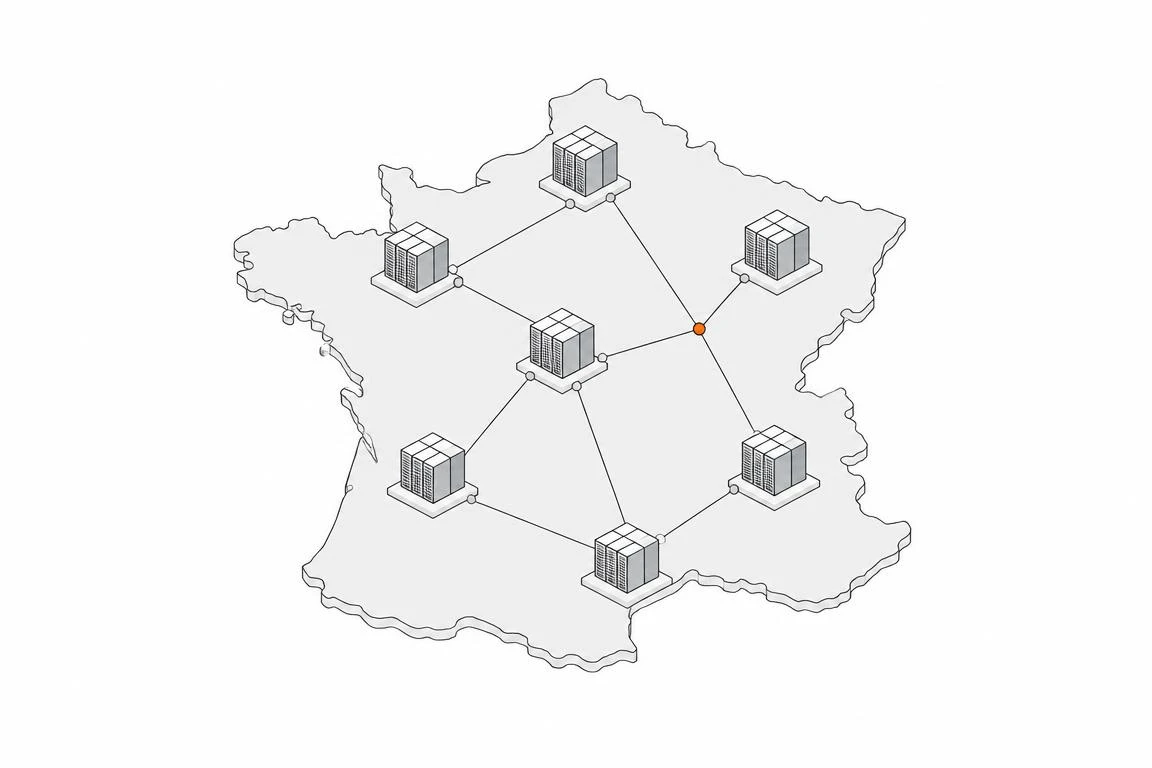
Data centers in France: a map of the major projects in 2026
France has become one of Europe's largest data center construction sites. Around 350 sites are in operation, and a new generation of campuses dedicated to artificial intelligence, ranging from several hundred megawatts to more than a gigawatt, is being prepared in Île-de-France and Hauts-de-France. Here is where they are being built, who is behind them and when they are due to open.
Read the article
Data centers and AI: why demand will soar by 2030
Data centers currently use around 2% of France's electricity. That figure could double by 2035, and rise much further under some scenarios. Artificial intelligence is driving this change of scale. Here are the projections, and what they mean for the country's infrastructure.
Read the article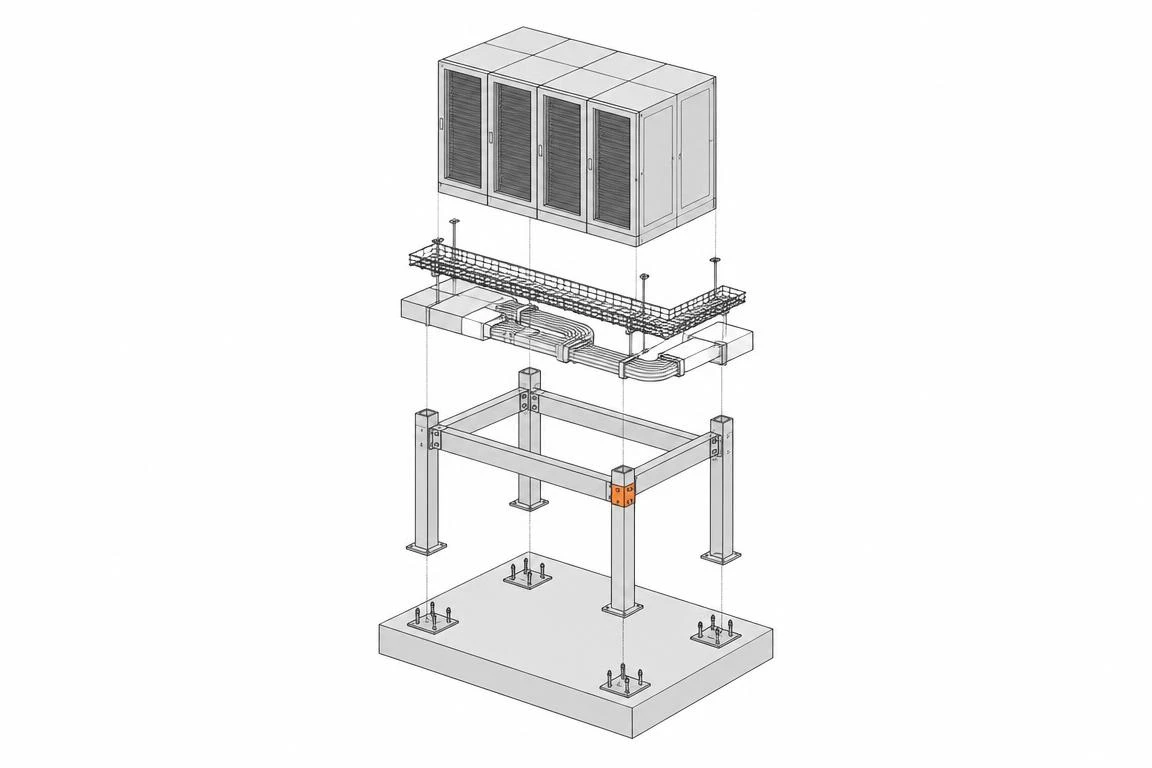
Building a data center: the stages, the lead times and the main difficulties
From the outside, a data center looks like a large warehouse. Inside, it is one of the most technical buildings there is: an electrical and thermal installation that must never stop. From idea to commissioning, a project goes through six main stages, and several pitfalls.
Read the article