
Building a data center: the stages, the lead times and the main difficulties
From the outside, a data center looks like a large warehouse. Inside, it is one of the most technical buildings there is: an electrical and thermal installation that must never stop. From idea to commissioning, a project goes through six main stages, and several pitfalls.
Contents
Stage 1 — Choosing the site
Everything starts with three criteria, in this order:
- The available power and the connection lead time (see Access to power, the new bottleneck for data centers).
- Land: area, buildability, natural hazards, proximity to fibre.
- The environment: water resources, neighbours, potential for heat reuse.
Large operators now favour brownfield industrial sites and zones identified by the State, but AI campuses covering several dozen hectares sometimes struggle to find land that is already developed.
Stage 2 — Design
Design sets the target level of availability, often expressed using the Uptime Institute Tier classification:
| Level | Principle | What it means |
|---|---|---|
| Tier II | redundant components | some maintenance requires a shutdown |
| Tier III | concurrently maintainable | every component can be maintained without cutting IT |
| Tier IV | fault tolerant | the site withstands any failure without interruption |
In practice, design organises the electrical chain (high-voltage intake, transformers, switchboards, UPS, batteries, generators), the thermal chain (cooling production, distribution, data hall cooling), fire safety, the building management system and security. For AI sites, liquid cooling adds hydraulic networks right into the racks (see Liquid cooling, immersion: the innovations changing how data centers are built).
The BIM digital model has become a central tool: it makes it possible to coordinate thousands of services in very tight spaces and to prepare for operation.
Stage 3 — Obtaining permits
A data center is generally a classified installation for environmental protection (ICPE) under French law, in particular because of its generators and fuel oil storage. Depending on its size, it needs an environmental impact assessment, a public inquiry, an environmental authorisation and a building permit. Large projects can now be classified as projects of major national interest, which speeds up some procedures (see Public policy: what the State and the regions are doing to attract data centers). Legal challenges, which are increasingly frequent, can add months or even years.
Stage 4 — Construction
The works involve many trades: earthworks, civil engineering, structural frame, roofing, then above all the MEP packages. On a data center, the share of the electrical and HVAC packages in the construction budget is much higher than on an office building.
Campuses are built in phases: a first building is handed over while the next ones are under construction. Operators increasingly use prefabrication (electrical modules, plant rooms, cooling units assembled in the factory) to save time and secure quality. This is the purpose of the power module factory that SoftBank and Schneider Electric plan to set up in Dunkirk.
Stage 5 — Commissioning
This is the phase most specific to data centers. It generally takes place in five levels, from factory acceptance of the equipment through to integrated tests of the whole site. During the final tests, power cuts and failures of chillers or generators are simulated, with load banks that reproduce the heat of the servers. The goal: to prove that the site delivers on its availability promises before the first customer moves in.
Stage 6 — Operating and evolving
Once in service, the site runs continuously, 24 hours a day. Data halls are filled gradually, and equipment evolves with each generation of servers. A well-designed data center anticipates these changes: power reserves, the option to switch to liquid cooling, extension of the heat network.
The five most common difficulties
- Grid connection, often the longest item in the schedule.
- Lead times for major equipment (transformers, generators, high-voltage switchboards), which can exceed a year.
- Local acceptance and legal challenges (see Data centers and the environment: water, land and local acceptance).
- Interfaces between packages and between players (operator, end client, project management, contractors, RTE).
- Skills: project managers and electrical, HVAC, commissioning and BIM engineers who have already delivered critical sites are rare (see How many engineers will it take to build tomorrow's data centers?).
Frequently asked questions
How long does it take to build a data center?
Constructing a building generally takes one to two years. But once site selection, permits and grid connection are added, a complete project frequently takes more than five years between announcement and commissioning.
What is data center commissioning?
It is the gradual, controlled start-up of all the installations, in several levels, up to integrated systems tests in which real failures are simulated to check that the site remains available.
What is the difference between Tier III and Tier IV?
A Tier III data center can be maintained without interrupting IT. Tier IV goes further: it must withstand any single failure without service interruption.
Sources
Read also
Liquid cooling, immersion: the innovations changing how data centers are built
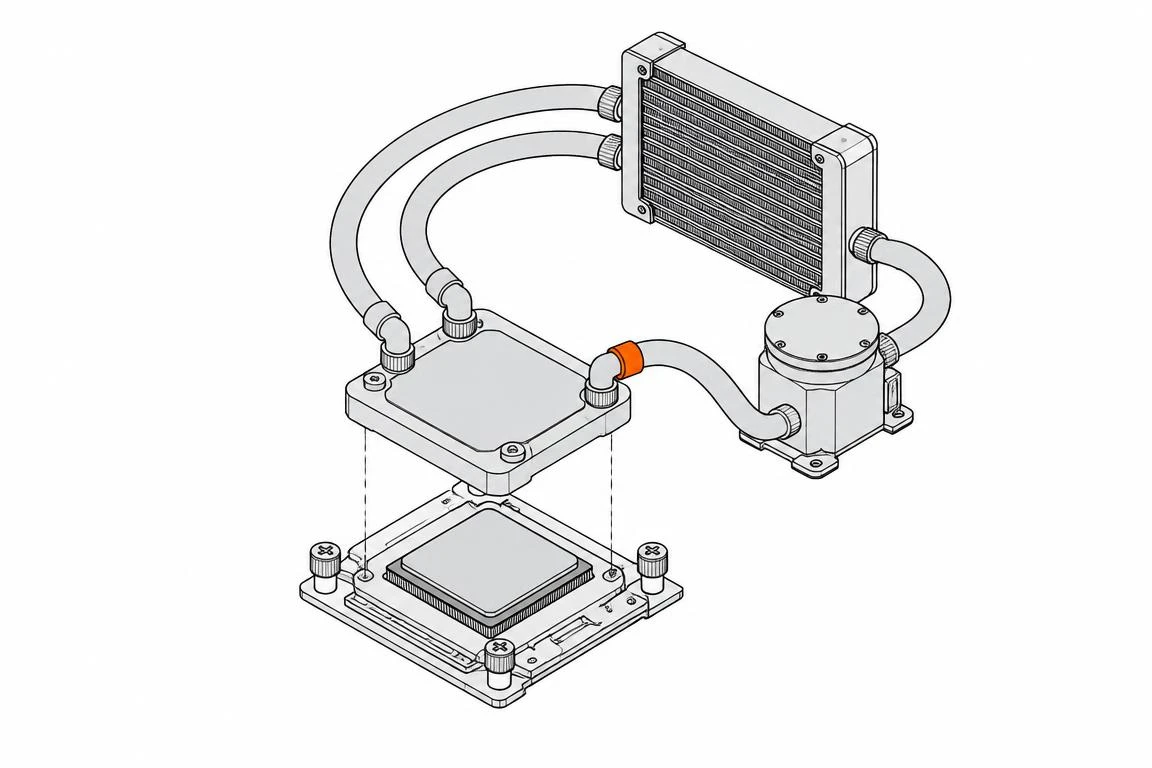
For decades, cooling a data center meant blowing cold air down aisles of servers. With AI, this model is reaching its limits: a single GPU rack now gives off as much heat as an entire room did fifteen years ago. Liquid is taking over, and the whole design of the buildings is changing.
Read the article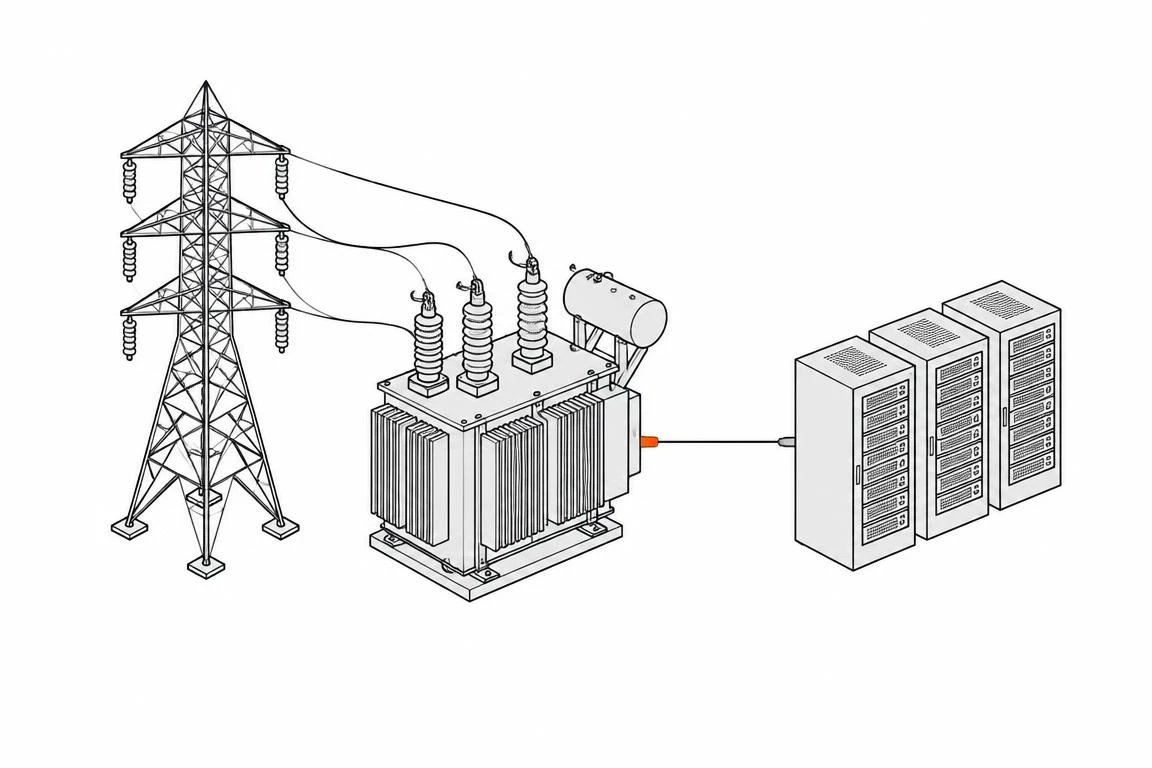
Access to power, the new bottleneck for data centers
France produces more electricity than it consumes. Yet getting a grid connection has become the longest and most contested step of a data center project. In eighteen months, the capacity these projects have reserved with RTE has more than tripled.
Read the article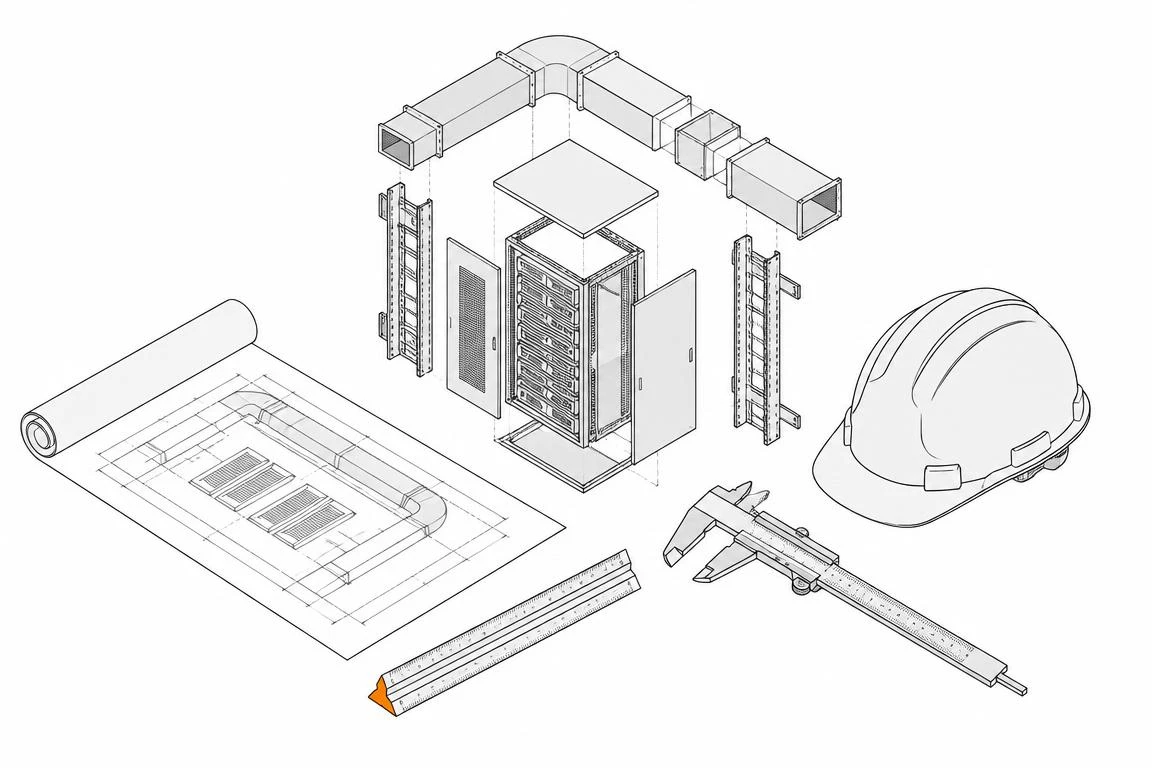
How many engineers will it take to build tomorrow's data centers?
Announcements are counted in gigawatts and tens of billions of euros. But a data center is not built with announcements: it takes teams. High-voltage electrical engineers, cooling specialists, construction managers, BIM managers, commissioning engineers: the wave of data centers is making these profiles one of the most sought-after resources in the construction sector.
Read the article