
Data centers and the environment: water, land and local acceptance
As projects grow, opposition is spreading. Farmland, water, rejected heat, electricity, local benefits: data centers have become a subject of public debate in France, as in the United States. Understanding these criticisms is now essential for a project to succeed.
Contents
Farmland, the first point of friction
AI campuses cover dozens of hectares. For lack of large enough brownfield sites, some projects are built on farmland. In Fouju, in Seine-et-Marne, the AI campus covers around 90 hectares of cultivated land; its developer says it could not find a suitable brownfield site. In the Indre, Google's project covers close to 195 hectares. Farmers' unions and associations condemn the loss of some of the most fertile land in the country.
Classification as a project of major national interest also allows exemptions from certain rules, which opponents criticise as undermining France's net zero land take objective (see Public policy: what the State and the regions are doing to attract data centers).
Water, a growing concern
Some data centers use water to remove heat, notably through cooling towers. After the droughts of recent summers, the issue has become sensitive. In Marseille, for example, some data centers are cooled with water that is then discharged into the Mediterranean at a higher temperature.
More and more projects highlight closed-loop or dry cooling systems that draw no drinking water. This is the case of the Fouju AI campus, whose developer announces water-free cooling. Opponents then point to other risks, such as refrigerant leaks.
Heat, electricity, jobs: the debate widens
Criticism also covers:
- heat released into the air instead of being reused (see Waste heat: how data centers are becoming district heating plants);
- electricity: the fear that data centers will capture grid capacity needed for other industrial projects or for the electrification of transport;
- local benefits: a data center employs few people in operation relative to its size. In Fouju, the developers announce 300 to 500 direct jobs;
- sovereignty: some opponents question the value of projects funded by non-European money.
Opposition gets organised
For the Fouju AI campus, authorised by the prefecture at the end of July 2026, a group of associations filed six challenges before the Paris administrative court of appeal, and a challenge to the building permit was announced. In the Drôme, faced with local reservations, a developer committed in October 2026 to limiting its site to 40 MW, not using drinking water and funding €10 million of local projects. In the Indre, Google's project also met strong opposition.
The subject has entered national politics: on 6 October 2026, a draft resolution asked the National Assembly for a moratorium on data centers backed by non-European players and for a democratic debate.
How to build acceptance
The projects that progress best have several things in common:
- A carefully chosen site: brownfield, industrial or port area, close to a heat network.
- A restrained design: cooling without drinking water, heat recovery planned from the outset, landscape integration.
- Early consultation, before the project is fixed, with quantified commitments.
- Tangible local benefits: heat for public facilities, jobs and training, local taxes.
- Transparency on energy, water and employment, measured over time.
For engineering teams, these requirements are not just a matter of communication: they translate into technical choices, and are decided at the design stage.
Frequently asked questions
Do data centers use a lot of water?
It depends on their cooling system. Sites that use cooling towers consume water through evaporation; those that use closed loops and dry coolers use very little. More and more projects in France commit to not using drinking water.
Why is the Fouju data center contested?
Opponents criticise the development of around 90 hectares of farmland, the heat that will be released, the risks linked to cooling fluids and the origin of the funding. Several legal challenges were filed by associations after the prefectural authorisation of July 2026.
Does a data center create jobs?
Yes, especially during construction, which involves many trades over several years. In operation, staff numbers are smaller: a few dozen to a few hundred people depending on the size of the site.
Sources
- Banque des Territoires, the revolt against data centers (October 2026, in French)
- Politis, report on the campaigns (May 2026, in French)
- Sud Radio / AFP, the Fouju project (in French)
- Presse-citron, campaign against the AI campus (in French)
- Kohen Avocats, the Fouju permit (in French)
- L'ADN, data centers in Marseille (in French)
- Mac4ever, opposition in the Drôme and the Indre (in French)
Read also
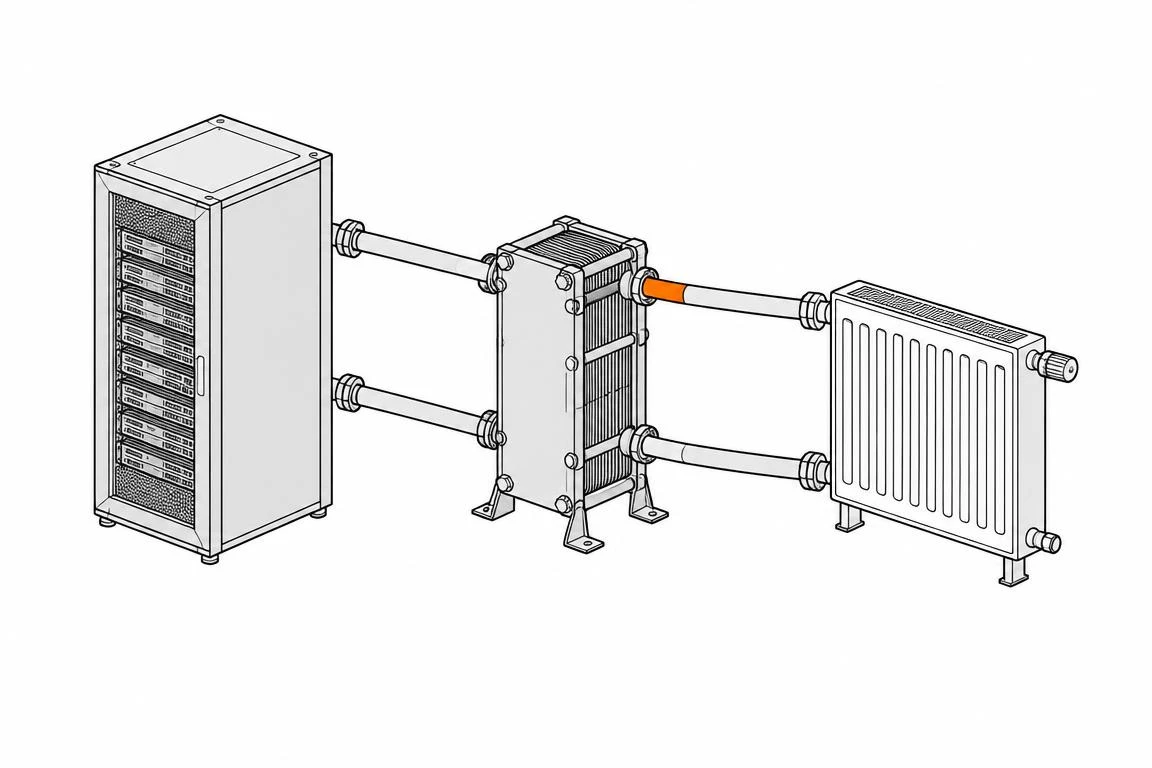
Waste heat: how data centers are becoming district heating plants
All the electricity a data center uses ends up as heat. Today in France, almost all of that heat is released into the air. A new obligation and the arrival of liquid cooling could turn it into a resource for heating homes, swimming pools or greenhouses.
Read the article
Public policy: what the State and the regions are doing to attract data centers
Hosting data centers has become a stated priority of the French State, in the name of digital sovereignty and the AI race. Ready-to-use sites, accelerated grid connection, project of major national interest status, nuclear electricity contracts: here are the levers used, and the debates they spark.
Read the article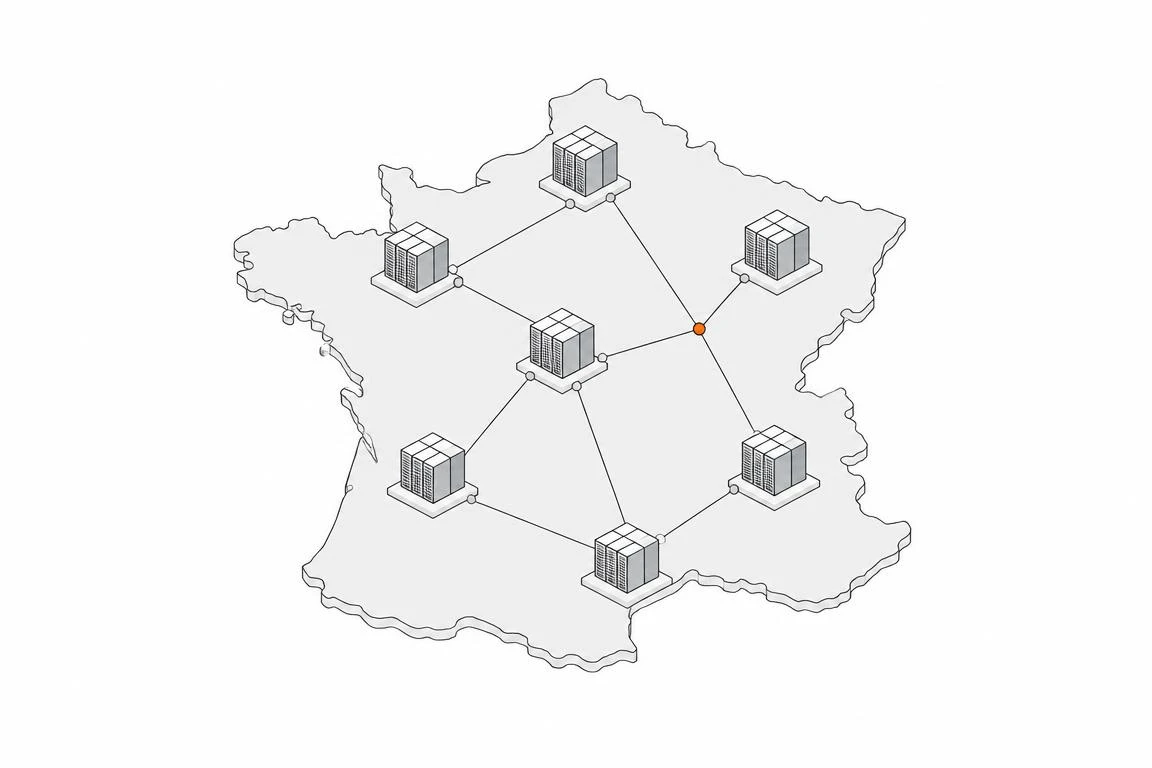
Data centers in France: a map of the major projects in 2026
France has become one of Europe's largest data center construction sites. Around 350 sites are in operation, and a new generation of campuses dedicated to artificial intelligence, ranging from several hundred megawatts to more than a gigawatt, is being prepared in Île-de-France and Hauts-de-France. Here is where they are being built, who is behind them and when they are due to open.
Read the article