
Public policy: what the State and the regions are doing to attract data centers
Hosting data centers has become a stated priority of the French State, in the name of digital sovereignty and the AI race. Ready-to-use sites, accelerated grid connection, project of major national interest status, nuclear electricity contracts: here are the levers used, and the debates they spark.
Contents
An openly stated national strategy
Since the AI Action Summit of February 2025, the government has highlighted three strengths: abundant, low-carbon electricity, a robust power grid and a central geographical position in Europe. The aim is to attract investment from operators and AI players, and not to let the processing of European data go entirely to the United States.
The State's five levers
1. Identified, "ready-to-use" sites
As early as February 2025, the government announced 35 sites ready to host data centers. The State has since identified some sixty suitable sites, taking into account land, connection capacity and local acceptance. A twenty-page guide on siting data centers was published in November 2025.
2. Project of major national interest status
This is the most debated measure. Article 15 of the economic simplification law, enacted on 26 May 2026, extends to "large-scale" data centers the status of project of major national interest, created by the 2023 Green Industry law. To qualify, a project must be of particular importance for the digital transition, the ecological transition or national sovereignty. Classification is made by decree.
In practice, this status speeds up several procedures: bringing planning documents into line, grid connection, recognition of an imperative reason of overriding public interest. The stated goal is to significantly reduce procedural lead times that are often considered longer in France than in neighbouring countries.
3. Accelerated grid connection
With RTE's fast-track procedure, approved by the French Energy Regulatory Commission, five sites can host 700 MW to 1 GW within three to four years (see Access to power, the new bottleneck for data centers).
4. Access to nuclear electricity
EDF offers large consumers long-term contracts backed by nuclear generation. Data4 signed one in September 2025, for 40 MW over twelve years. EDF also makes former industrial sites available.
5. Public investment
Bpifrance is a partner in the Fouju AI campus, alongside MGX, Mistral AI and Nvidia. Regions and inter-municipal bodies, for their part, act on land, business parks and support for developers.
The obligations placed on data centers
Support comes with requirements. The French law known as DDADUE requires data centers of at least 1 MW to reuse their waste heat, with a minimum reuse rate of 20%, set to rise to 40% (see Waste heat: how data centers are becoming district heating plants). Large sites must also report their energy performance, under the European Energy Efficiency Directive.
An intensifying political debate
Classification as a project of major national interest was criticised from the parliamentary debates onwards. Some twelve associations called for article 15 to be removed and for a two-year moratorium on the largest projects, to allow time for a public debate. Their arguments: fewer consultations, the loss of farmland, pressure on water and electricity, and dependence on foreign investors.
On 6 October 2026, a draft resolution tabled in the National Assembly called for a moratorium on data centers backed by non-European players. The subject is now also a local issue, present in several of the 2026 municipal election campaigns (see Data centers and the environment: water, land and local acceptance).
Frequently asked questions
What is a project of major national interest for a data center?
It is a status created by the 2023 Green Industry law and extended to large data centers by the economic simplification law of 26 May 2026. Granted by decree, it speeds up planning, grid connection and environmental authorisation procedures.
Do data centers have environmental obligations in France?
Yes. Data centers of at least 1 MW must reuse their waste heat (minimum reuse rate of 20%, set to increase) or justify this with a cost-benefit analysis, and report their energy performance.
Who decides where a data center is built?
The building permit and the environmental authorisation fall to the municipality and above all to the prefecture, depending on the size of the project. For projects classified as of major national interest, the State takes a leading role in the procedures.
Sources
- Le Journal des entreprises, adoption of the simplification law (in French)
- Batirama, siting guide and the law of 26 May 2026 (in French)
- Next, associations and article 15 (in French)
- Banque des Territoires, draft resolution of 6 October 2026 (in French)
- Banque des Territoires, EDF–Data4 contract (in French)
- Weblex, energy obligations of data centers (in French)
- LeMagIT, identified sites (in French)
Read also
Data centers in France: a map of the major projects in 2026
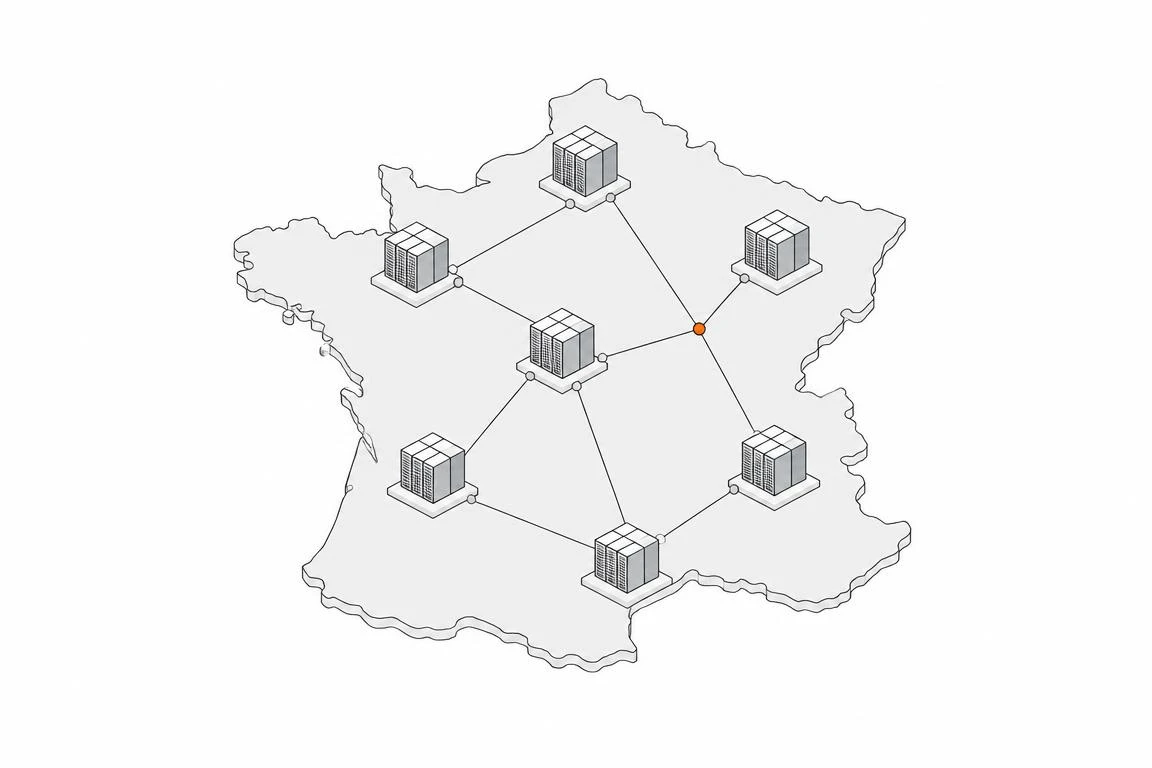
France has become one of Europe's largest data center construction sites. Around 350 sites are in operation, and a new generation of campuses dedicated to artificial intelligence, ranging from several hundred megawatts to more than a gigawatt, is being prepared in Île-de-France and Hauts-de-France. Here is where they are being built, who is behind them and when they are due to open.
Read the article
€109 billion for AI: where is data center money going in France?
In February 2025, France announced €109 billion of investment in artificial intelligence. Eighteen months later, announcements have multiplied, from SoftBank to Brookfield. But an investment pledge is not a data center. A look at who is funding what, and at what building a site really costs.
Read the article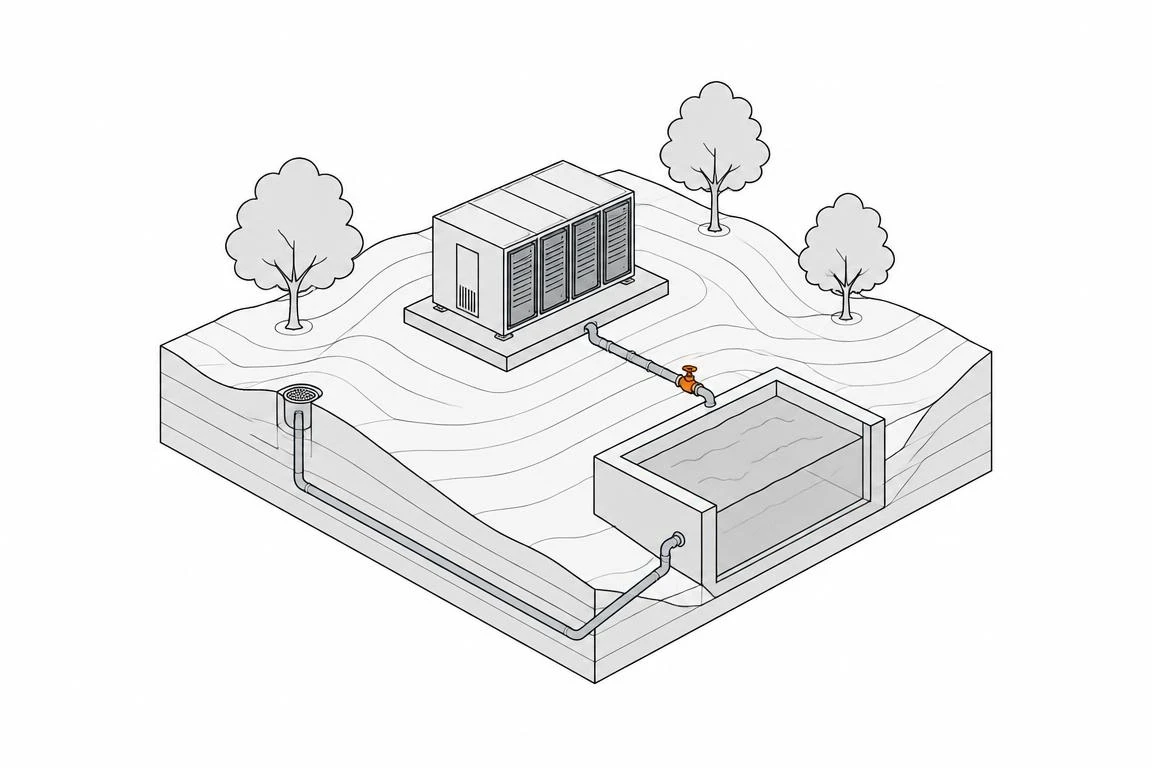
Data centers and the environment: water, land and local acceptance
As projects grow, opposition is spreading. Farmland, water, rejected heat, electricity, local benefits: data centers have become a subject of public debate in France, as in the United States. Understanding these criticisms is now essential for a project to succeed.
Read the article