
How many engineers will it take to build tomorrow's data centers?
Announcements are counted in gigawatts and tens of billions of euros. But a data center is not built with announcements: it takes teams. High-voltage electrical engineers, cooling specialists, construction managers, BIM managers, commissioning engineers: the wave of data centers is making these profiles one of the most sought-after resources in the construction sector.
Contents
A wave of construction concentrated in time
Between the Fouju AI campus (first phase in 2028), SoftBank's programme in Hauts-de-France (3.1 GW by 2031) and the campuses of Data4, Brookfield, Digital Realty or OpCore, France has to deliver several gigawatts of capacity within a few years (see Data centers in France: a map of the major projects in 2026). For the Fouju AI campus alone, the developers announce 300 to 500 direct jobs in operation, not counting the teams mobilised during the years of construction.
There is no consolidated official figure for the number of engineers needed. But the logic is simple: each campus involves, for several years, project owner, project management, contractor and inspection teams, a high proportion of whom are engineers specialised in the technical packages.
The most sought-after skills
| Skill | What it covers on a data center | Why it is scarce |
|---|---|---|
| HV/LV electrical engineer | intake substations, transformers, switchboards, UPS, generators, low-current systems | simultaneous demand from nuclear, RTE, Enedis and industry |
| HVAC / cooling engineer | cooling production, distribution, liquid cooling, heat recovery | liquid cooling is still a new skill |
| Construction / site manager | running the site, safety, coordination of trades, scheduling | few profiles have already delivered critical sites of this size |
| Project manager | budget, deadlines, interfaces with the operator, the client and RTE | requires both a technical and a contractual view |
| BIM manager / coordinator | digital model, services coordination, preparing for operation | exceptional density of services |
| Commissioning engineer | testing and commissioning of installations, from level 1 to level 5 | a specific job, with little training available in France |
| HSE / QHSE engineer | safety on sites with high electrical risk, environment | rising volume of construction sites |
Job ads show it: design firms are looking, for example, for high-current and low-current electrical engineers for hyperscale data centers of several dozen megawatts, with skills in fire safety, building management systems and fibre.
Competing with other major projects
Data center profiles are the same as those needed by the nuclear revival (EPR2), grid reinforcement, the decarbonisation of industry, gigafactories and major transport projects. All these programmes are hiring at the same time.
In the United States, where the wave started earlier, the labour shortage is already a recognised brake on building AI campuses. According to the recruitment platform Skillit, workers on data center sites there earned around 32% more in early 2026 than on comparable commercial sites.
Transferable careers
The good news is that experience gained on other critical facilities transfers well to data centers:
- nuclear and energy bring a culture of safety, redundancy and testing;
- industry and gigafactories bring experience of utilities, process and large construction sites;
- transport infrastructure and hospitals bring the management of interfaces and of installations that must never stop.
For project owners, the challenge is to put together teams that combine these experiences quickly, then keep them for the whole duration of the project. A change of contact in mid-construction is costly on such a technical facility.
How Miles Group meets this need
Miles Group supports players in construction, energy and mobility with specialised engineers, through technical assistance, owner's engineering (AMO) or a dedicated project team. Our teams have notably worked on AWS data centers, on Line 18 of the Grand Paris Express, on the Verkor gigafactory in Dunkirk and on the EPR2 reactors at Penly. With a turnover of 9% and a time-between-assignments rate of 1% in 2025, we focus on team stability, which is essential on projects lasting several years.
Frequently asked questions
Which jobs are hiring in data center construction?
Mainly high- and low-voltage electrical engineers, HVAC and cooling engineers, construction and site managers, project managers, BIM managers, commissioning engineers and HSE managers.
Why is there a shortage of engineers for data centers?
Because many major projects must be delivered at the same time, between 2027 and 2031, and the same skills are sought by nuclear, power grids, industry and transport.
Can an engineer from nuclear or industry work on a data center?
Yes. The culture of safety, redundancy, testing and interface management acquired on these facilities is directly useful on a data center, particularly for electrical systems, HVAC and commissioning.
Sources
Read also
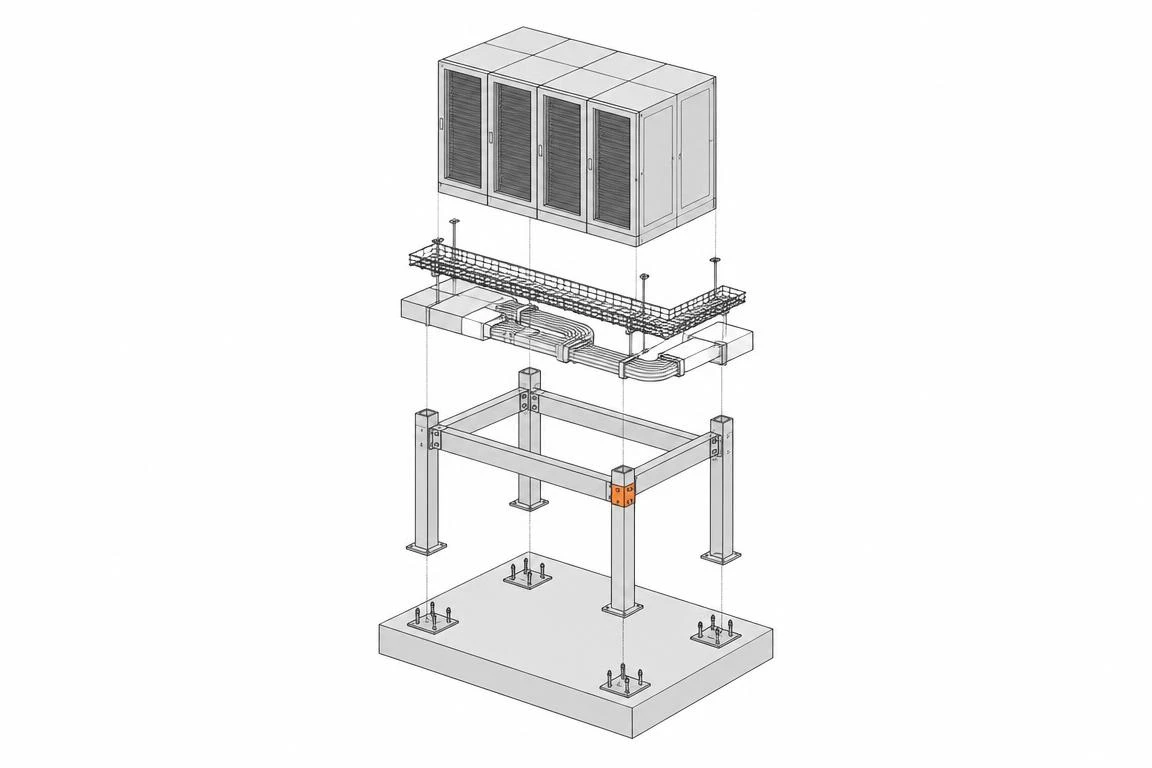
Building a data center: the stages, the lead times and the main difficulties
From the outside, a data center looks like a large warehouse. Inside, it is one of the most technical buildings there is: an electrical and thermal installation that must never stop. From idea to commissioning, a project goes through six main stages, and several pitfalls.
Read the article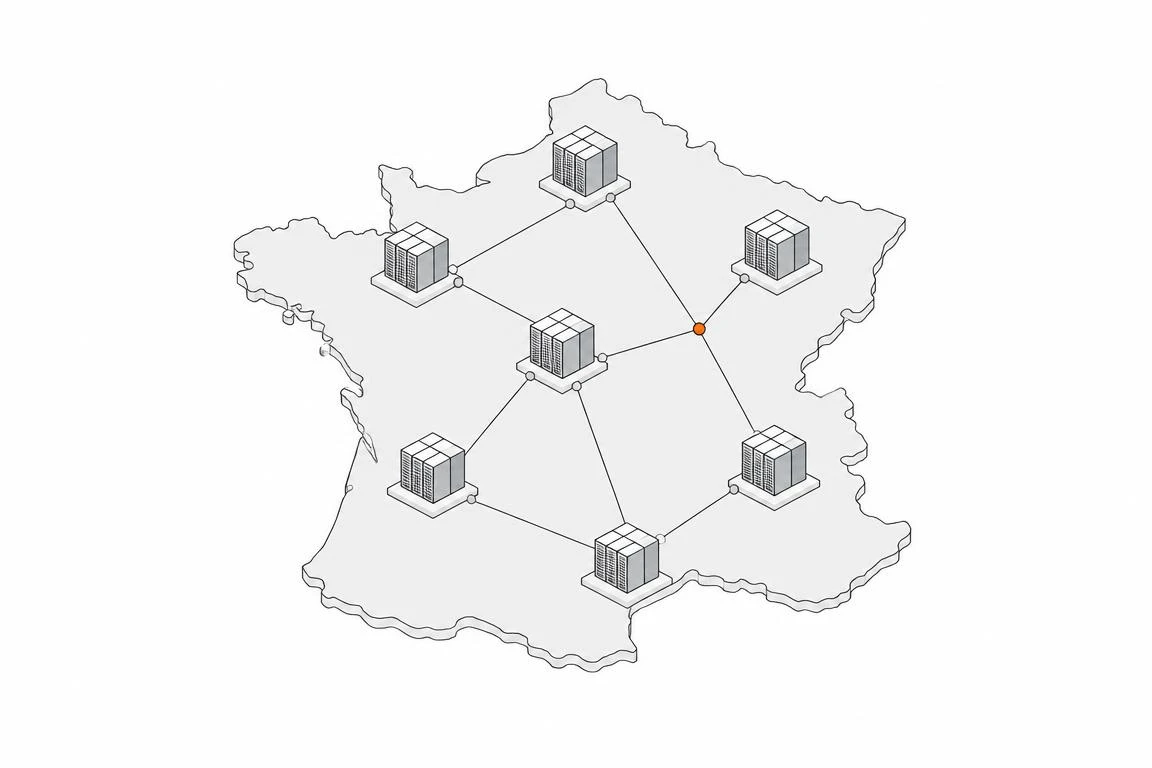
Data centers in France: a map of the major projects in 2026
France has become one of Europe's largest data center construction sites. Around 350 sites are in operation, and a new generation of campuses dedicated to artificial intelligence, ranging from several hundred megawatts to more than a gigawatt, is being prepared in Île-de-France and Hauts-de-France. Here is where they are being built, who is behind them and when they are due to open.
Read the article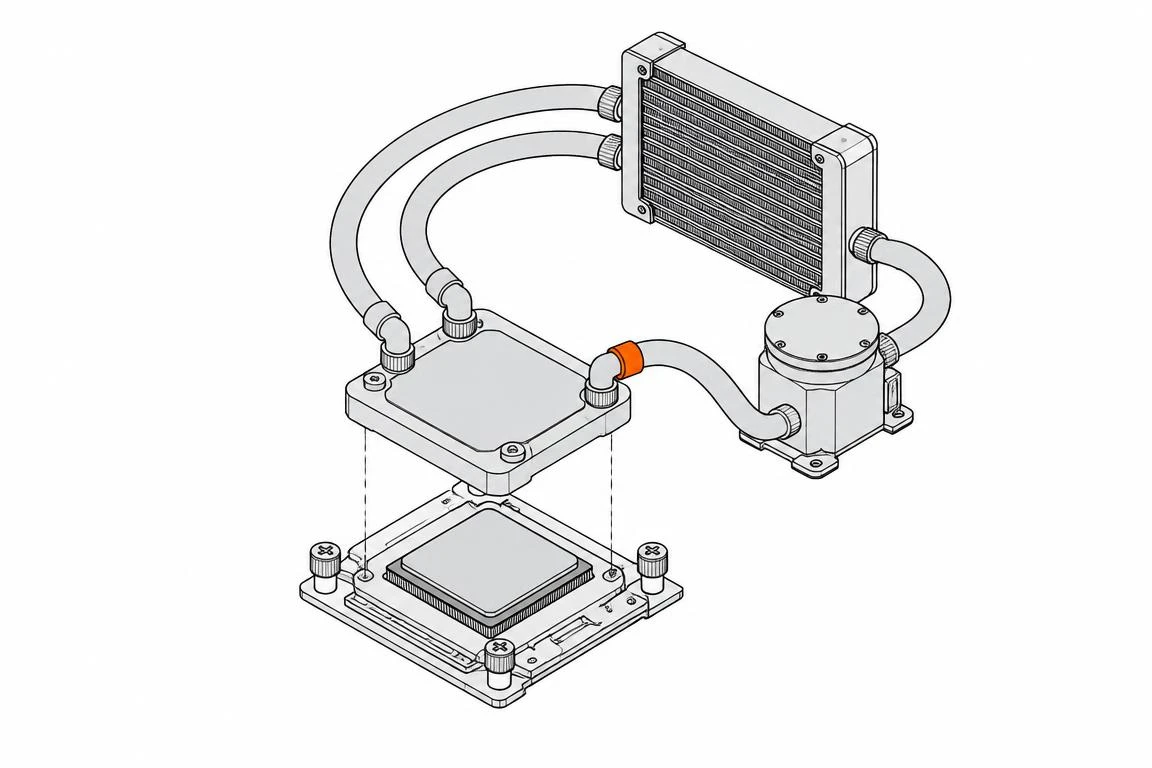
Liquid cooling, immersion: the innovations changing how data centers are built
For decades, cooling a data center meant blowing cold air down aisles of servers. With AI, this model is reaching its limits: a single GPU rack now gives off as much heat as an entire room did fifteen years ago. Liquid is taking over, and the whole design of the buildings is changing.
Read the article