
Liquid cooling, immersion: the innovations changing how data centers are built
For decades, cooling a data center meant blowing cold air down aisles of servers. With AI, this model is reaching its limits: a single GPU rack now gives off as much heat as an entire room did fifteen years ago. Liquid is taking over, and the whole design of the buildings is changing.
Contents
Why air is no longer enough
A conventional server rack draws a few kilowatts. A rack fitted with the latest generations of GPUs draws several dozen, or even more than 100. Yet all the electricity a server uses ends up as heat. Beyond 25 to 30 kW per rack, blowing cold air becomes inefficient: it would take enormous airflows and noisy, power-hungry fans, and hot spots would still occur.
Manufacturers' roadmaps announce even higher densities in the coming years, with some projections mentioning racks of several hundred kilowatts. Liquid, which carries heat far more efficiently than air, is therefore becoming essential for AI.
The three main families of liquid cooling
| Technology | Principle | Typical density | Impact on the building |
|---|---|---|---|
| Rear-door heat exchanger | a water heat exchanger replaces the rear door of the rack | up to a few dozen kW | low, suited to refurbishment |
| Direct-to-chip | a cold plate with liquid flowing through it is mounted on each processor | around 80 to 130 kW per rack | hydraulic network up to the racks, coolant distribution units (CDUs) |
| Immersion | servers are submerged in a dielectric fluid | 100 to 200 kW per tank | room completely rethought, floor loads, handling |
Direct-to-chip, the de facto standard
Direct liquid cooling (DLC) brings a liquid, usually treated water, as close as possible to the components that heat up, through cold plates fixed to the chips. It is integrated into the servers of the major manufacturers, which explains why hyperscalers favour it. In practice, part of the heat (memory, power supplies, drives) is still removed by air: most AI data halls are therefore hybrid, air and liquid.
Immersion, to go further
Submerging servers in a non-conductive fluid removes the fans and allows very high densities. But it requires tanks, specific handling, fluids to be managed over their whole life cycle and compatible servers. It is a promising technology that is still in the minority.
What this changes for design and construction
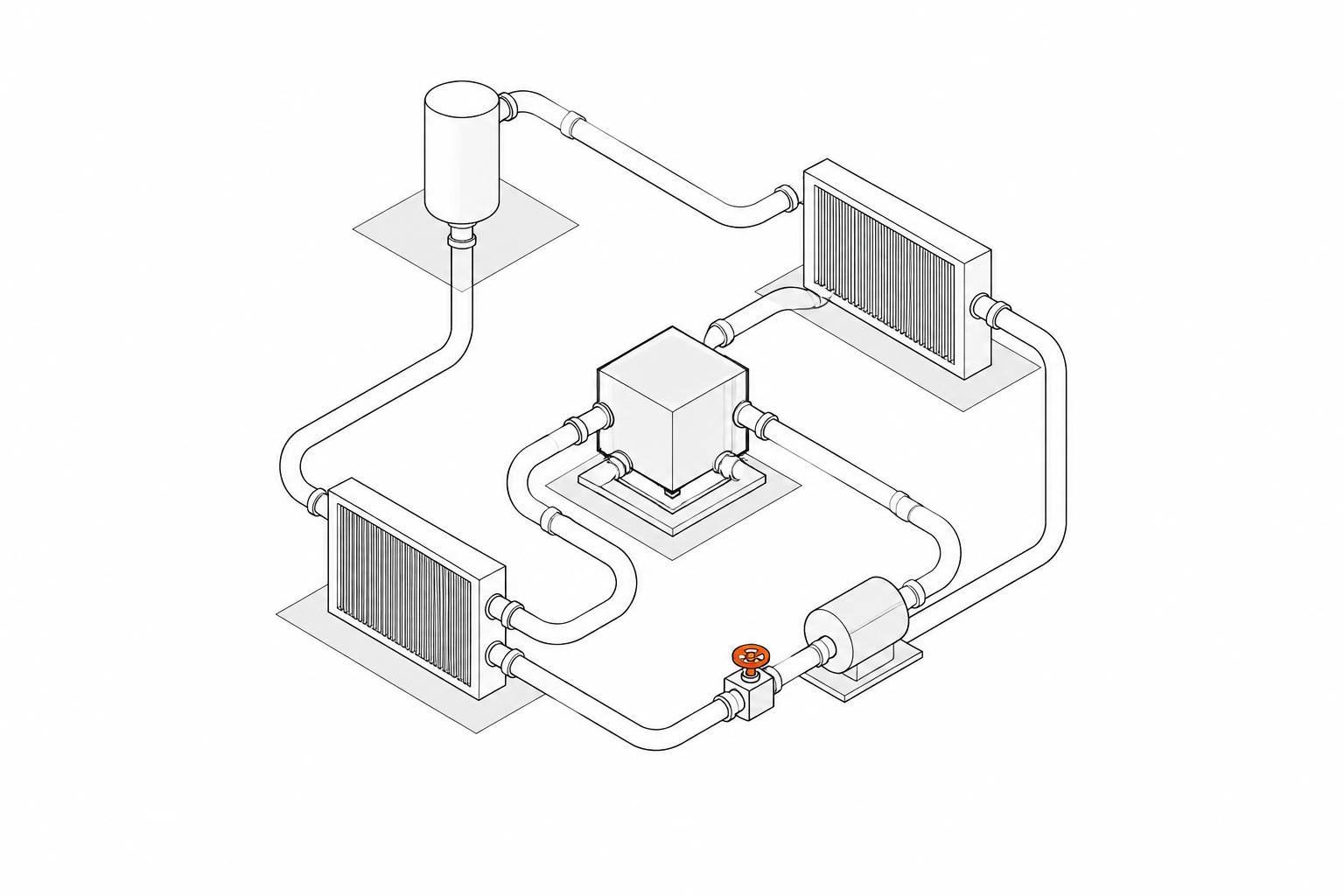
Liquid cooling moves the boundary between building and IT. HVAC teams must design hydraulic networks right into the data hall, with coolant distribution units (CDUs) that separate the server circuit from the building circuit. Some CDUs now exceed 2 MW of cooling capacity.
Several points become critical:
- water quality (filtration, treatment, material compatibility);
- leak detection and the design of routes above or below the racks;
- floor loads and handling, especially with immersion;
- coordination between packages (electrical, HVAC, industrial pipework and IT), ideally managed in a BIM model;
- commissioning, which is longer and more demanding, with flow, pressure and switchover tests.
An unexpected benefit: heat that can finally be recovered
In an air-cooled data center, the water leaving the chillers is lukewarm, around 30 °C: too cold to supply a district heating network. With liquid cooling, it can reach around 60 °C. This heat becomes usable for heating homes, swimming pools or greenhouses, which ties in directly with the new regulatory obligations (see Waste heat: how data centers are becoming district heating plants).
Ademe estimates the heat recovery potential of data centers in France at 4 to 13 TWh net in 2035, largely thanks to liquid cooling.
What about energy efficiency?
The reference indicator is PUE (Power Usage Effectiveness): the total energy of the site divided by the energy used by IT. The closer it is to 1, the less energy is "wasted" outside the servers. By reducing ventilation and allowing cooling with warmer water, and therefore fewer compressors, liquid significantly improves this ratio.
Frequently asked questions
What is direct-to-chip cooling?
It is a technique in which a metal plate with liquid flowing through it is mounted directly on the processor or GPU. The liquid absorbs the heat and carries it out of the server to a coolant distribution unit, then to the cooling production or heat recovery equipment.
Does liquid cooling use water?
Not necessarily. Direct-to-chip circuits are closed: the water circulates in a loop. A data center's water consumption depends mainly on how heat is rejected outside (cooling towers, dry coolers, heat recovery).
Can an existing data center switch to liquid cooling?
Yes, often gradually: rear-door heat exchangers or a few rows of direct-to-chip, before a wider conversion. Immersion, on the other hand, generally requires a room designed for it.
Sources
Read also
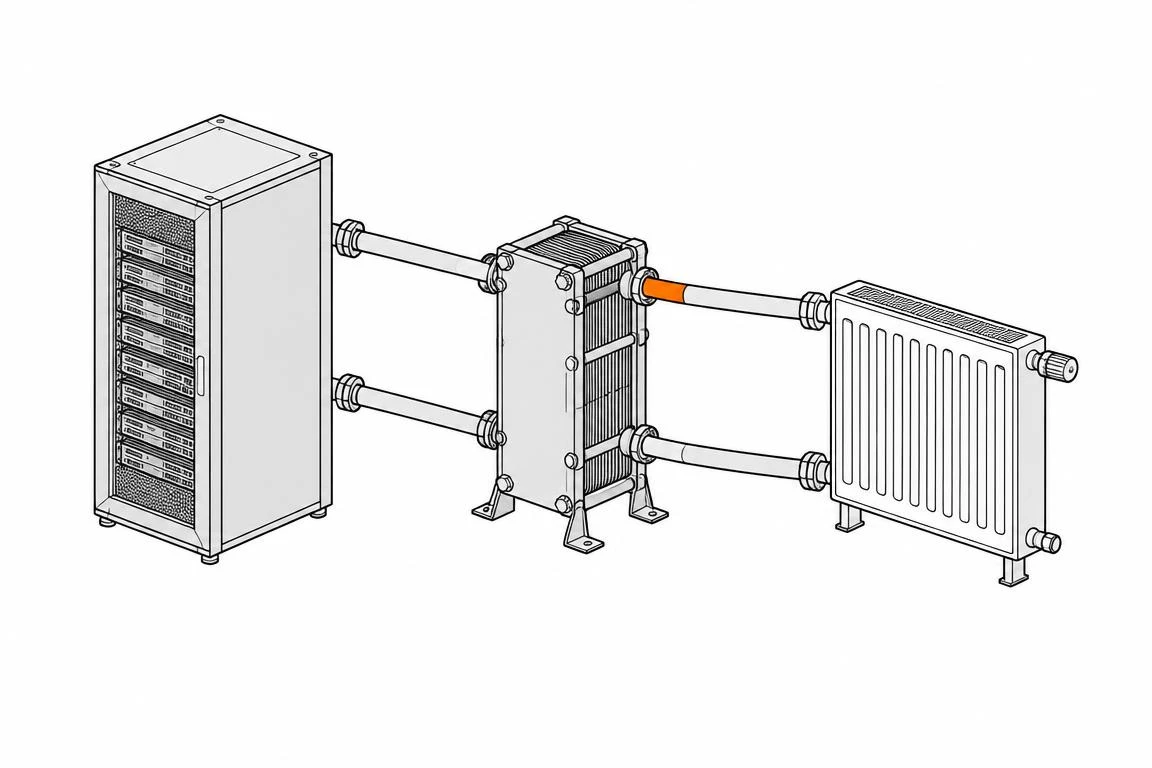
Waste heat: how data centers are becoming district heating plants
All the electricity a data center uses ends up as heat. Today in France, almost all of that heat is released into the air. A new obligation and the arrival of liquid cooling could turn it into a resource for heating homes, swimming pools or greenhouses.
Read the article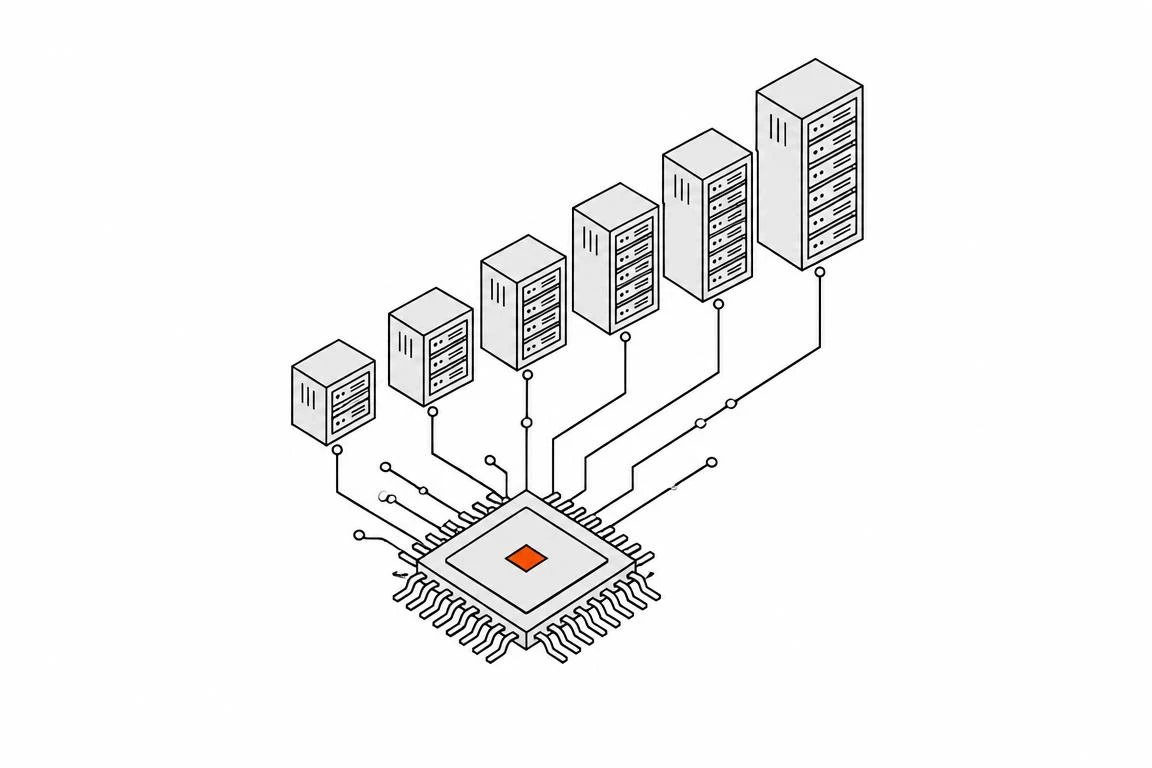
Data centers and AI: why demand will soar by 2030
Data centers currently use around 2% of France's electricity. That figure could double by 2035, and rise much further under some scenarios. Artificial intelligence is driving this change of scale. Here are the projections, and what they mean for the country's infrastructure.
Read the article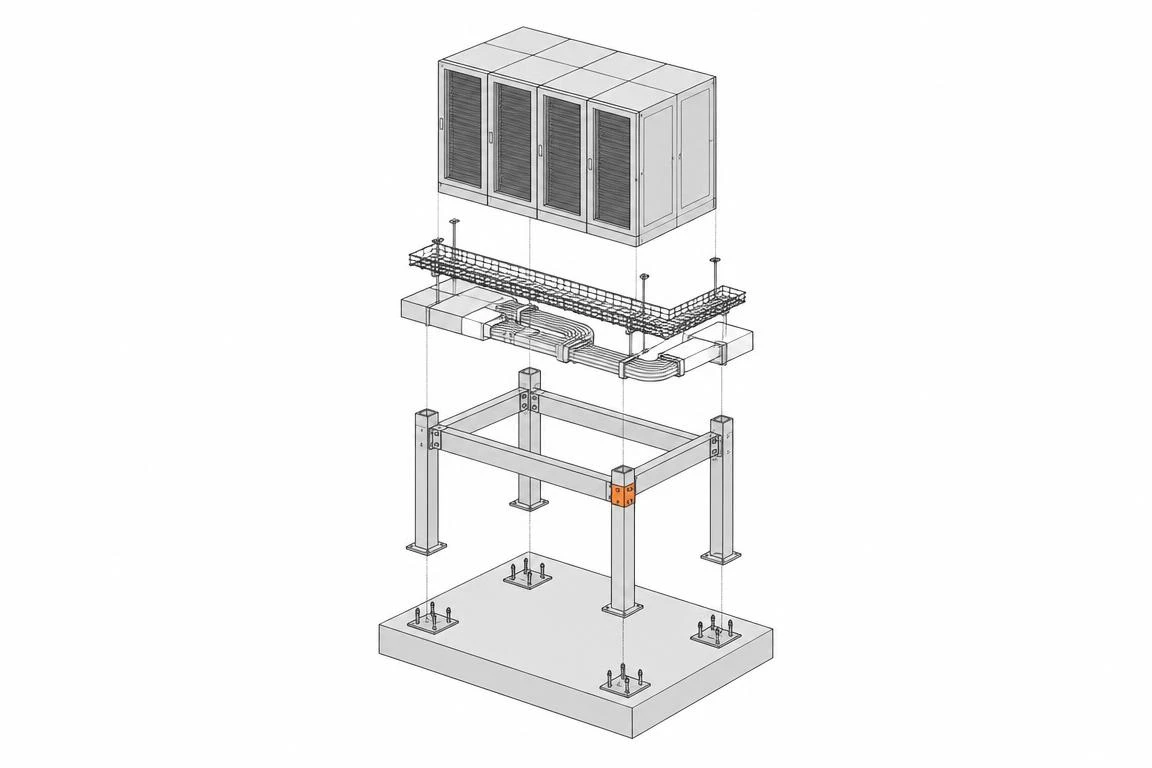
Building a data center: the stages, the lead times and the main difficulties
From the outside, a data center looks like a large warehouse. Inside, it is one of the most technical buildings there is: an electrical and thermal installation that must never stop. From idea to commissioning, a project goes through six main stages, and several pitfalls.
Read the article