
Data centers and AI: why demand will soar by 2030
Data centers currently use around 2% of France's electricity. That figure could double by 2035, and rise much further under some scenarios. Artificial intelligence is driving this change of scale. Here are the projections, and what they mean for the country's infrastructure.
Contents
Where are we starting from?
In France, around 300 to 350 data centers are in operation. RTE, the French transmission system operator, estimates their consumption at around 10 TWh a year, close to 2% of the electricity used in the country. Ademe, the French environment agency, which counted 352 active sites in 2024, uses a slightly lower figure, around 8 TWh.
Worldwide, data centers used around 415 TWh in 2024, the equivalent of France's entire annual electricity consumption.
Why AI changes everything
Generative AI weighs in two ways. Training models mobilises thousands of GPUs for weeks. Inference, meaning every request sent to an AI assistant or tool, multiplies as usage grows. Both require processors that are far more powerful and power-hungry than traditional servers, and data centers that are much denser (see Liquid cooling, immersion: the innovations changing how data centers are built).
On top of this come uses that are already growing: cloud, video, connected devices, and the wish of European companies and public bodies to process their data on European soil.
Projections for France
| Source | 2030 | 2035 |
|---|---|---|
| RTE (long-term adequacy report) | 15 to 20 TWh (around 3%) | 23 to 28 TWh (around 4%) |
| Ademe, trend scenario | — | around 37 TWh consumed in France, more than 105 TWh for all of French people's digital uses, including abroad |
The gaps between scenarios are large, and some players consider the official projections cautious given the connection requests RTE has already received: close to 18 GW reserved in May 2026 (see Access to power, the new bottleneck for data centers).
Ademe highlights an often overlooked point: in its trend scenario, around two thirds of the increase would happen abroad, in countries with more carbon-intensive electricity. Building in France, with low-carbon electricity, can therefore reduce the overall footprint of French digital uses.
And in Europe?
According to the European Commission, data center consumption in the European Economic Area could rise from 61 TWh in 2025 to 117 TWh in 2029, around 3.7% of electricity demand. Ireland shows how far this can go: data centers there already absorb more than 20% of national electricity.
What this means in practice
Growth on this scale is not only played out in the data halls. It means building:
- substations and power lines to connect the sites;
- very large technical buildings, designed for unprecedented densities;
- cooling and heat recovery systems;
- fibre and heat networks around the campuses.
EDF has set itself the goal of developing 150 TWh of new demand by 2035, including 20 TWh linked to data centers. For the French power system, these new consumers are both an outlet for generation and a challenge for the grid.
Frequently asked questions
How much electricity do data centers use in France?
Around 10 TWh a year according to RTE, the French transmission system operator, close to 2% of national electricity consumption.
How much will data centers consume in 2030?
RTE projects between 15 and 20 TWh in 2030 for data centers located in France, then 23 to 28 TWh in 2035, around 4% of the country's consumption.
Why does AI use so much energy?
Because training and running models relies on very powerful graphics processors, grouped in large numbers in very dense racks, which draw a lot of electricity and give off a lot of heat that has to be removed.
Sources
- RTE, Data centers in key figures (in French)
- Connaissance des énergies, Ademe scenarios (in French)
- L'info durable, Ademe study (in French)
- Selectra, RTE forecasts (in French)
- Selectra, press review and European Commission figures (in French)
- JeChange, EDF targets (in French)
- Opéra Énergie, the Irish example (in French)
Read also
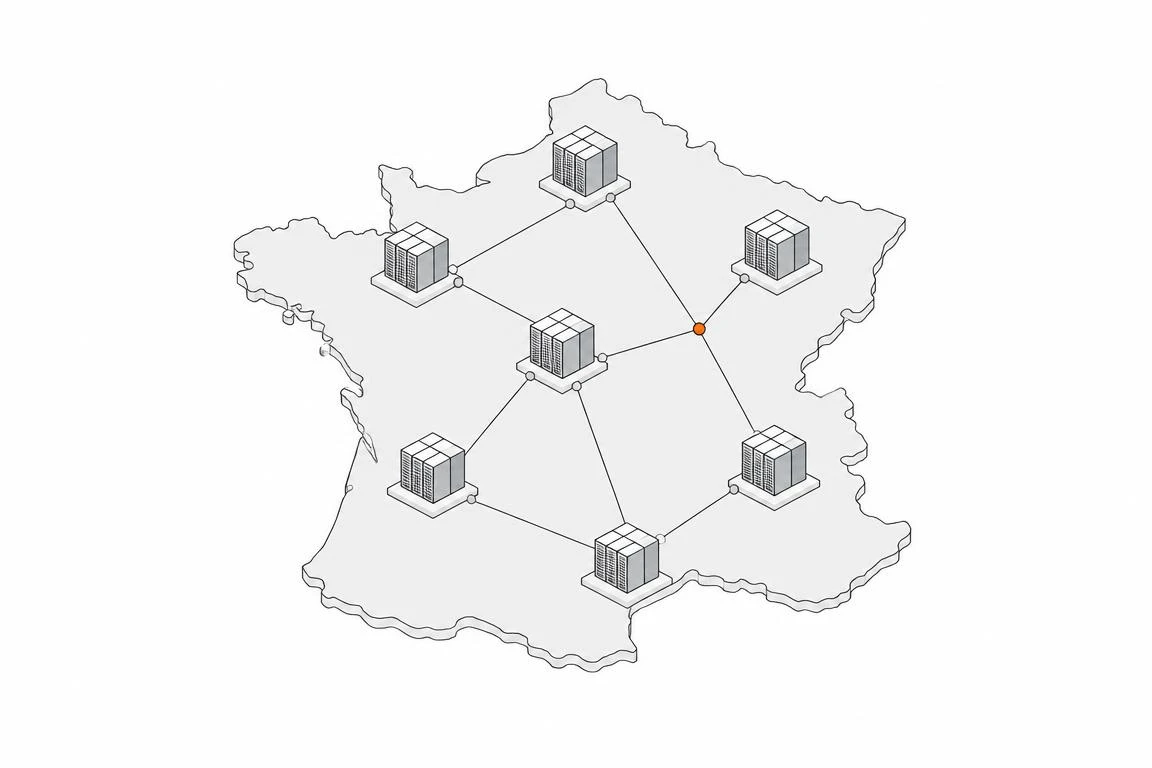
Data centers in France: a map of the major projects in 2026
France has become one of Europe's largest data center construction sites. Around 350 sites are in operation, and a new generation of campuses dedicated to artificial intelligence, ranging from several hundred megawatts to more than a gigawatt, is being prepared in Île-de-France and Hauts-de-France. Here is where they are being built, who is behind them and when they are due to open.
Read the article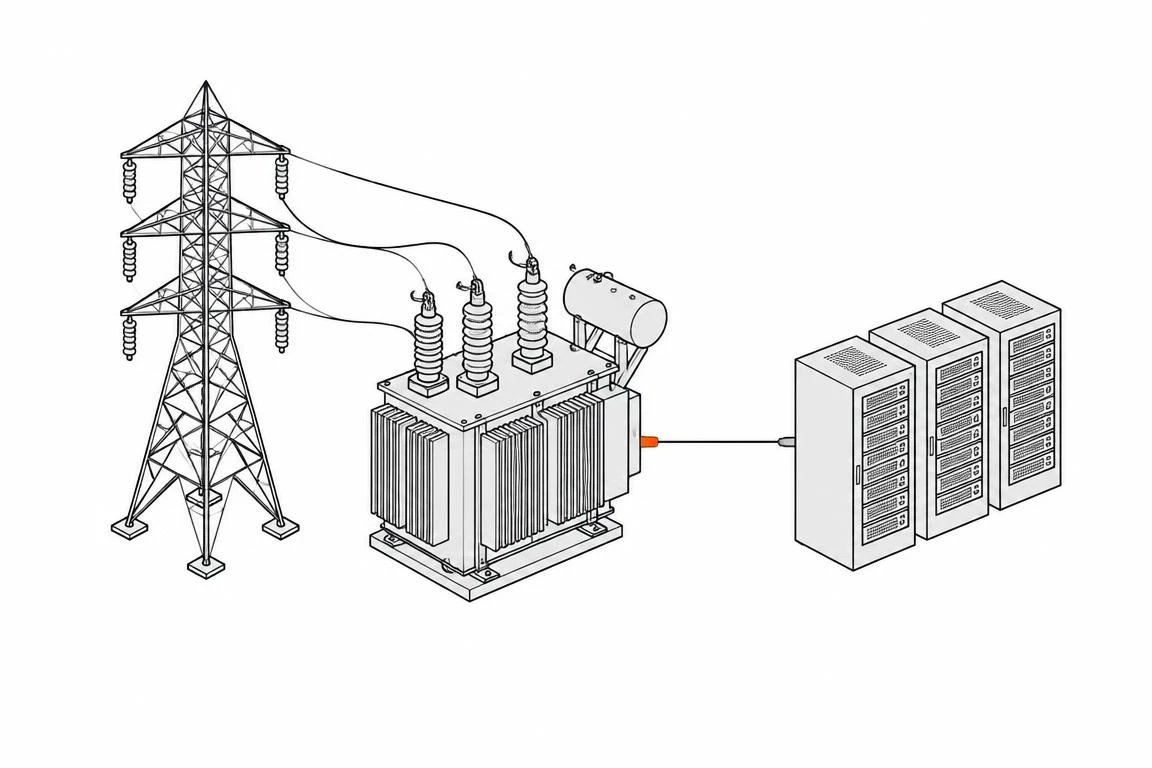
Access to power, the new bottleneck for data centers
France produces more electricity than it consumes. Yet getting a grid connection has become the longest and most contested step of a data center project. In eighteen months, the capacity these projects have reserved with RTE has more than tripled.
Read the article
How many engineers will it take to build tomorrow's data centers?
Announcements are counted in gigawatts and tens of billions of euros. But a data center is not built with announcements: it takes teams. High-voltage electrical engineers, cooling specialists, construction managers, BIM managers, commissioning engineers: the wave of data centers is making these profiles one of the most sought-after resources in the construction sector.
Read the article