
Power transformers: why lead times are exploding
A large power transformer used to take about two years to deliver. It now takes up to five. Grid operators book manufacturing slots years in advance, and projects have to build this constraint into their design from day one.
Contents
The equipment everything flows through
Between a 400,000-volt line and a workshop socket, electricity changes voltage several times. At each step, a transformer. A written question published in the French Official Journal in September 2026 points out that 90% of the electricity consumed in France passes through this equipment.
Grid operators therefore buy it in large numbers: about 30 power transformers a year for RTE, and about 21,000 distribution transformers a year for Enedis, compared with 14,000 in 2022.
From two years to five
Before demand surged, a large power transformer was delivered in two to two and a half years. Lead times now reach up to five years in France. In the United States, analysts cite up to four years for high-capacity units, and demand for generator step-up transformers there nearly quadrupled between 2019 and 2025.
As a result, French grid operators are booking production slots abroad until 2031.
Three causes that add up
Simultaneous demand. Renewal of ageing grids, offshore wind and solar connections, industrial electrification, data centers: every market is accelerating at once, in Europe and North America alike.
A concentrated raw material. A transformer's magnetic core is made of grain-oriented electrical steel. Global output relies almost entirely on two plants, in Japan and South Korea. Any strain on this steel hits transformer factories directly.
Manufacturing that is slow to scale. A large transformer is custom-built, wound and assembled largely by hand, then tested on a test bay. Opening a new plant or line takes several years, and skilled labour is scarce.
What the shortage means for a project
The transformer has gone from standard equipment to a critical schedule item. For a substation, an industrial connection or a data center, this has very practical consequences:
- order early, sometimes before all permits are granted, with clauses that protect the project owner if the project changes;
- freeze the specification as soon as possible: any late change (voltage, rating, cooling, noise level) can send the order to the back of the queue;
- standardise where possible, to reuse a design that is already qualified;
- follow manufacturing closely: design reviews, factory inspections and acceptance tests, so that a defect found on site does not add months of delay;
- prepare for arrival: heavy haulage, civil works, oil containment pit and installation must be ready on the day the equipment is delivered.
A skill that is becoming strategic
This situation puts a premium on precise know-how: writing the right technical specification, following a supplier in the factory, witnessing tests and fitting the equipment into a tight project schedule. These are systems engineering and project management roles, at the junction between the manufacturer, the grid operator and the project owner.
Frequently asked questions
What is the lead time for a power transformer?
For large power transformers, lead times now reach up to five years, according to a written question published in the French Official Journal in September 2026. They were two to two and a half years before demand surged.
Why is there a transformer shortage?
Demand is rising everywhere at once (grid reinforcement, renewables, electrification, data centers), while manufacturing capacity and the supply of grain-oriented electrical steel grow slowly.
How many transformers do French grid operators buy?
About 30 power transformers a year for RTE and about 21,000 distribution transformers a year for Enedis.
Sources
- French National Assembly, written question no. 18288 on the transformer shortage (OJ of 22 September 2026)
- pv magazine USA, transformer lead times in the United States (May 2026)
- Connaissance des énergies, Enedis orders €3.6 billion of electrical equipment
- RTE, Réussir l'électrification de la France (3 July 2026)
Read also
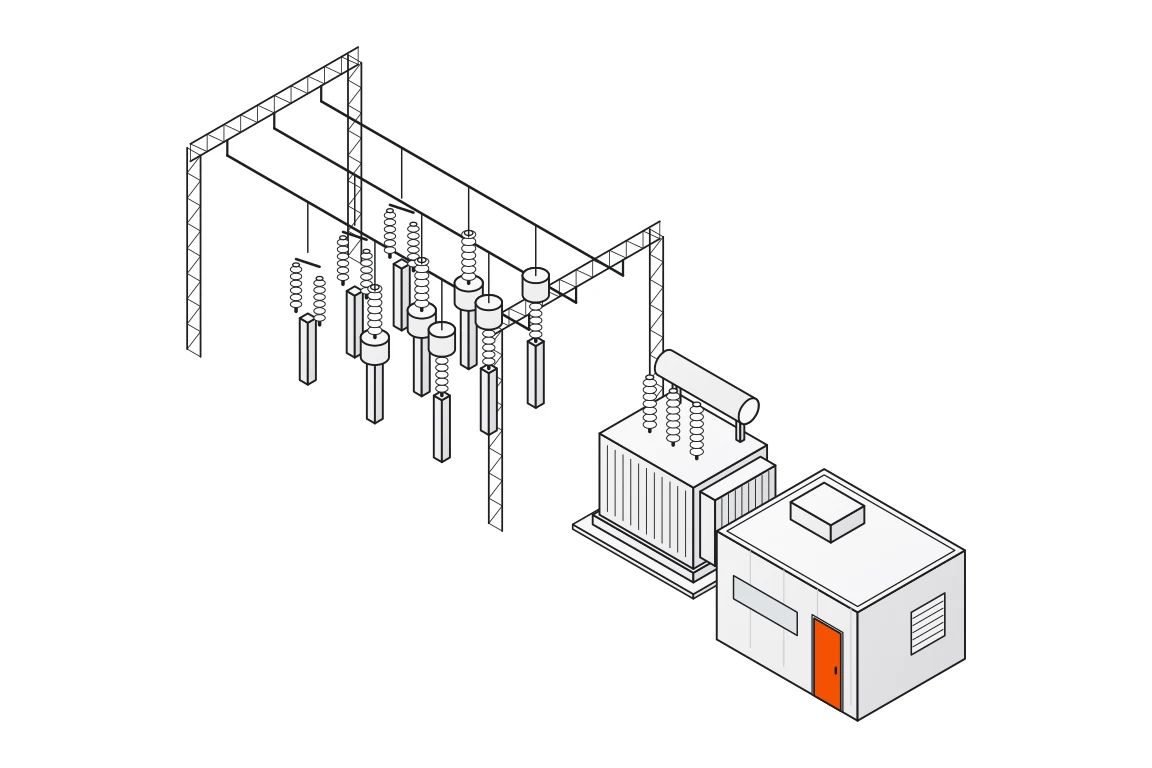
From substation to energisation: the stages of a high-voltage project
A high-voltage substation connects a transmission line to an industrial site, a renewable plant or the distribution grid. Building one involves a dozen trades, from grid studies to commissioning tests. Here are the main stages, and the points where a project gains or loses months.
Read the article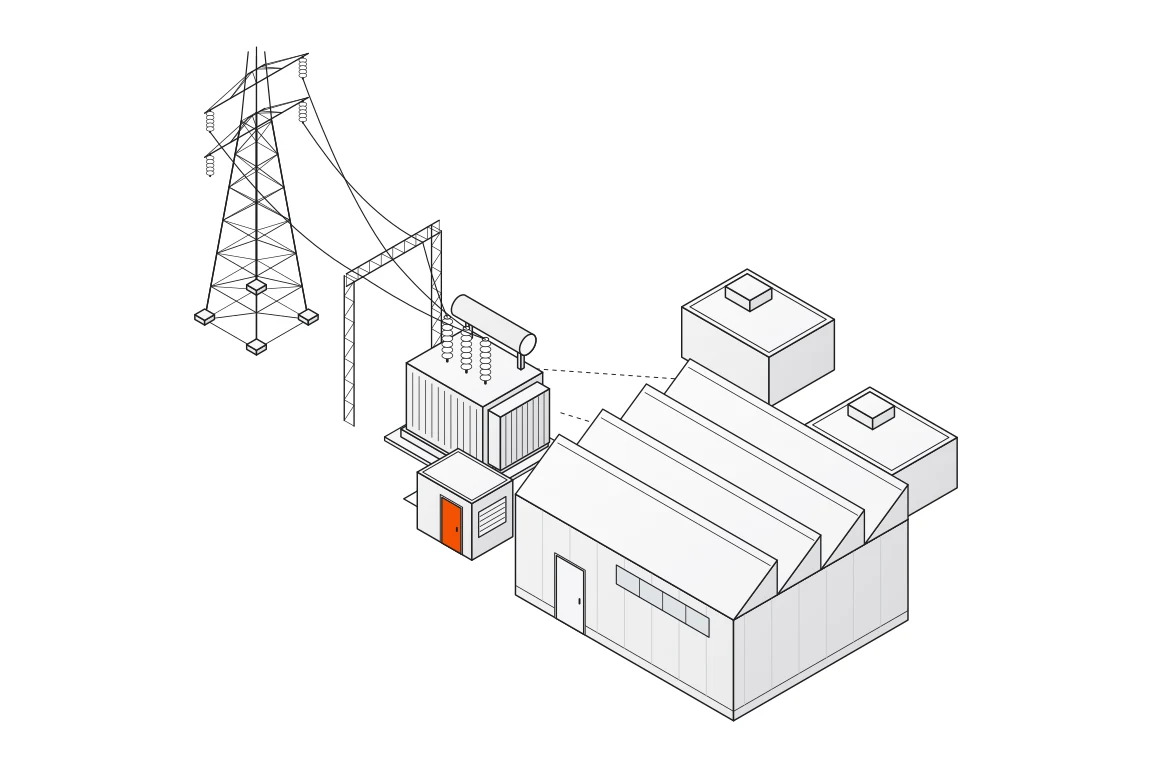
Grid connection: why industrial projects are waiting, and what is changing
More than 200 industrial projects are waiting for a connection to the French high-voltage grid. Their combined demand is close to three times the current consumption of French industry. For a project owner, grid connection has become a strategic question, to be asked when choosing the site.
Read the article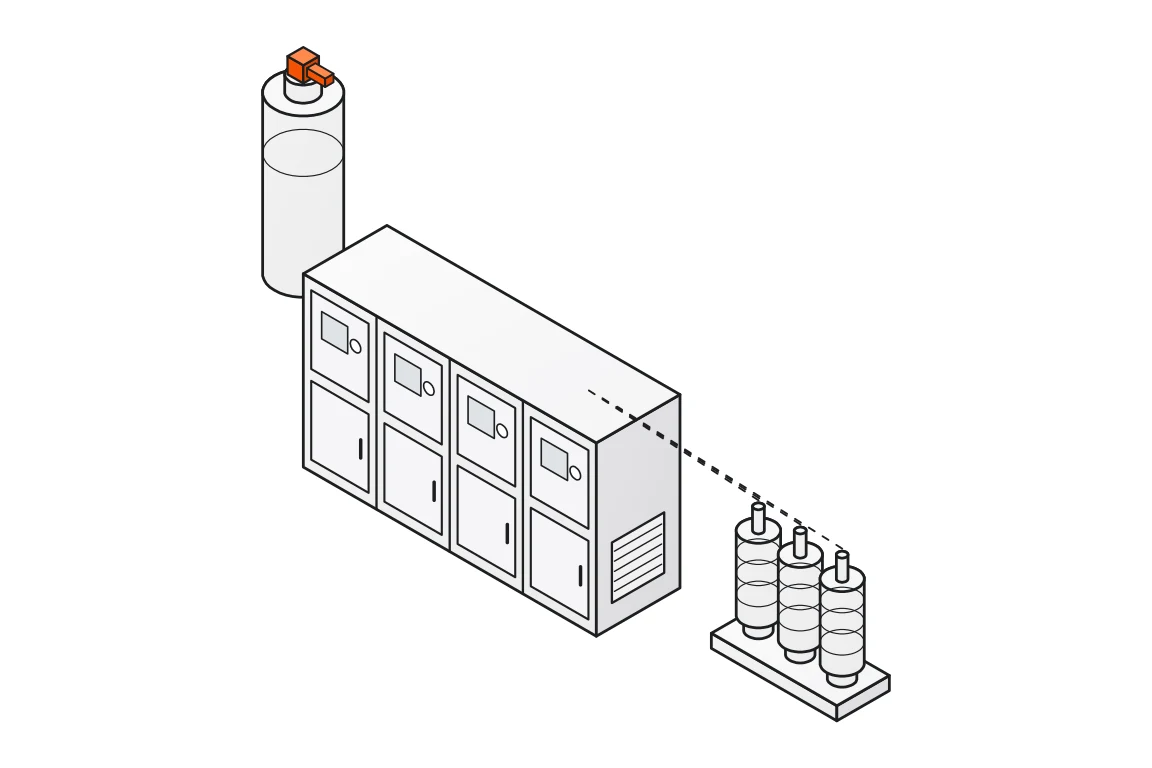
Phasing out SF6 in switchgear: the European timetable
SF6 has insulated and interrupted current in a large share of substations for decades. It is also the most potent greenhouse gas known. The European F-gas Regulation organises its exit from new switchgear, in stages, between 2026 and 2032.
Read the article